Hope Blog

What's new at Hope.

  1. Revelation 12:7-11 — Monsters & Mayhem

    › Sermons

    New to Hope? We’re glad you’re here! Text the word WELCOME to 512-777-1826 to connect with our welcome team!

    The big idea

    The monsters in Revelation are not a cipher for this week’s headlines. They are the Bible’s own
    long-running way of drawing the spiritual power that animates an evil empire — Leviathan, Rahab,
    Daniel’s four beasts, and finally the dragon who gets named. Read it that way and the book stops
    being a puzzle and starts doing what it was written to do: hold frightened people steady.

    Key takeaways

    • Revelation’s monsters have an Old Testament address. Leviathan, Rahab and Daniel’s beasts
      are one tradition, and Revelation assumes you already know it.
    • When the Bible explains its own imagery, the explanation is the meaning. Pharaoh’s cows are
      seven years of plenty and seven of famine — there is nothing further to decode.
    • The sea is where the monsters live. So a beast coming up out of the water is a signal, not
      set decoration.
    • Rahab is Egypt. Evil empires get drawn as dragons because something is animating them
      behind the soldiers and the tax collectors.
    • Which is exactly why the people in front of you are not the enemy. The vision is what lets a
      persecuted church bless the people burning its scriptures.
    • Fear is the dragon’s chief weapon. “Who can fight against the beast?” is a question designed
      to make you bow.
    • The victors’ method gets named twice over: they conquered by the blood of the Lamb and the
      word of their testimony, and they did not cling to their lives even to the point of death.
    • God’s record as a dragon killer is long and public, and the last enemy left on the list is
      death itself.

    ▶ 1:14:28

    “You did see a bunch of pictures of monsters,” Matt began. “Let me explain myself.”
    Hope Chapel is midway through a study of Revelation, and the reason he gave for preaching it at all
    is worth keeping: it is Scripture, it is part of our inheritance, and it has been handed over almost
    entirely to people who use it for strange purposes. He wanted to restore its place of honor in our
    Bibles, and to let ordinary people — “normies,” in his word — approach it in a way that honors the
    text.

    Why Revelation, and how not to read it

    ▶ 1:15:08

    The series so far has worked through the seven letters Jesus dictates to John. There is no
    textual evidence those letters ever circulated separately — they travelled together, so every church
    read everyone else’s mail. Different encouragements, different rebukes, and underneath all of them
    one theme: be faithful to Jesus and stay faithful, whatever the circumstances are. Two temptations
    kept surfacing, and both were about fitting in — compromise with the world through idolatry, under
    the weight of Rome and the civic religion of their own cities, and sexual sin.

    ▶ 1:17:12

    Next Sunday brings the beast, the false prophet and the number 666 — which means next Sunday
    brings the temptation Matt wanted named in advance. You can read this book by holding it up against
    a news feed: that’s definitely Trump, or that’s Obama, or that’s the pope, and, as he noted, it is
    always the current pope. “That is a way you can read the book of Revelation,” he said, “but I don’t
    think it’s a healthy way to do it. The best context for this book is the Bible itself.” So rather
    than open with the beast, he started with the third character standing beside it — the dragon — who
    is on the periphery of the story but far easier to get at.

    When the Bible explains its own imagery, believe the explanation

    ▶ 1:20:16

    The pattern is consistent, and Pharaoh’s dream is the cleanest example of it
    (Genesis
    41:1–7
    ). Cows come up out of the Nile. You could get out a dream dictionary and freelance — Matt
    did, briefly, for comic effect, running from Angus beef to what’s for dinner to who’ll be thinner in
    the famine. But God gave the interpretation, and once he did, that was all anyone needed: seven
    years of plenty, seven years of famine. Nobody was ever meant to expect livestock in the water.
    “There’s no amphibious cow.” The imagery was bizarre on purpose, to arrest a hard heart; the
    interpretation was plain on purpose, to settle it.

    That yields two exercises for Revelation. Where the book stops and explains itself, highlight it
    and take it to the bank. And where Old Testament imagery shows up, ask what it meant the first
    time — because that is usually a strong clue to what it means now.

    Leviathan: the creature that does not frighten God

    ▶ 1:21:49

    Start in Job, where God is showing Job that he is not merely a very strong man.
    “Can you
    draw out Leviathan with a fishhook?”
    Obviously not — Job could not even find the thing. And it
    is not a whale, whatever people want to make of it: its back is rows of shields shut up closely as
    with a seal, and then this.

    “Out of his mouth go flaming torches; sparks of fire leap forth. Out of his nostrils comes forth
    smoke, as from a boiling pot and burning rushes. His breath kindles coals, and a flame comes forth
    from his mouth.”

    Job 41:19–21

    Picture seeing that come out of the water while you are standing in a wooden boat holding an oar.
    You would jump overboard. You would throw up. And God’s nerves would not move one bit — which is the
    entire point of the passage. “He’s like God’s pet,” Matt said. “He’s this little goldfish named
    Sparky, but he scares you.” The creature is
    without
    fear and king over all the sons of pride
    , and he is being used as a measuring stick for
    somebody else’s greatness.

    ▶ 1:24:06

    The psalmist wants deliverance from the nations, and the hero he needs is one with monster-killing
    already on his résumé. Matt called him God’s hype man — remember what you did, do it again.

    “Yet God my King is from of old, working salvation in the midst of the earth. You divided the sea
    by your might; you broke the heads of the sea monsters on the waters. You crushed the heads of
    Leviathan; you gave him as food for the creatures of the wilderness.”

    Psalm 74:12–14

    Notice the odd seam. Dividing the sea belongs to one story only, and Israel was not rescued from a
    hydra that day. So who is Leviathan standing in for? Egypt.

    Rahab, and the dragon inside the empire

    ▶ 1:25:47

    “Awake, awake, put on strength, O arm of the Lord; awake, as in days of old, the generations of
    long ago. Was it not you who cut Rahab in pieces, who pierced the dragon? Was it not you who dried
    up the sea, the waters of the great deep, who made the depths of the sea a way for the redeemed to
    pass over?”

    Isaiah 51:9–10

    Hebrew poetry does not rhyme at the end of the line the way English insists on doing; it works in
    couplets that say the same thing twice in a slightly different key. So “cut Rahab in pieces” and
    “pierced the dragon” are one idea, and the next verse names the event outright — the sea dried, a way
    made, the redeemed passing over. This is not the woman who hid the spies in Joshua; the names only
    look alike in English. It is a kingdom. Isaiah says so plainly a few chapters earlier, rebuking
    Judah for going down to Egypt for protection against Babylon — the plan, as Matt put it, was to form
    an alliance and make it like a gang so the big bad Babylonians would back off:
    “Egypt’s
    help is worthless and empty; therefore I have called her ‘Rahab who sits still.’”

    Which raises the question the whole message turns on. In a killer kingdom, where exactly is the
    wickedness located? In that soldier? That official? “There’s this kingdom,” Matt said, “but there’s
    also something dark and creepy that animates it behind it. If you peer close enough, you can see the
    dragon in that empire.” And that day is coming for it:
    the
    same feast day when God swallows up death forever and wipes tears from every face
    is the day
    when he
    slays the dragon that is in the sea
    . Rescue and dragon-killing are not two events. They are one
    day, described from two sides.

    Daniel’s beasts come up out of the sea

    ▶ 1:31:21

    “I saw in my vision by night, and behold, the four winds of heaven were stirring up the great
    sea. And four great beasts came up out of the sea, different from one another.”

    Daniel 7:2–3

    A lion, a bear, a leopard, and a fourth with ten horns and iron teeth. Write those down, Matt told
    the room — they come back. Daniel does not sit calmly through this:
    “my
    spirit within me was anxious, and the visions of my head alarmed me”
    — so he walks up to one of
    the figures standing there and asks what it means, which is exactly the move the whole message is
    recommending. And he gets an answer:
    these
    four great beasts are four kings who shall arise out of the earth
    , and the saints of the Most High
    will receive the kingdom forever. Same pattern as Rahab: you may have no idea what a monster named
    Rahab looks like, but you know exactly what Egypt looked like — chariots, horsemen, spearmen,
    soldiers with weapons chasing Israel down. The fourth one is called
    a
    kingdom
    outright, so we need not be rigid — a beast can be a king or the thing he rules. And
    note the address. They come out of the sea, because by now the sea is bad guys’ headquarters. That is
    where Leviathan lives. That is where Rahab lives. Monsters live in this thing.

    Revelation names the dragon

    ▶ 1:35:36

    The chapter opens with a battle rather than an explanation:
    war
    arose in heaven, Michael and his angels fighting against the dragon
    . The dragon fights back, loses,
    and there is no longer any place for him there. Then comes the loud voice, and the naming.

    “And the great dragon was thrown down, that ancient serpent, who is called the devil and Satan,
    the deceiver of the whole world… And they have conquered him by the blood of the Lamb and by the
    word of their testimony, for they loved not their lives even unto death.”

    Revelation 12:9–11

    The thread finally gets a name, and with it the engine of the whole book: a deeper and deeper
    revelation of the spiritual reality behind circumstances people can already see. Underline the method
    while you are there — blood of the Lamb, word of their testimony. That is twice now the book has
    stopped mid-vision to call for the faithful endurance of the saints, and it is the same thing the
    seven letters were asking for. That is the pastoral payoff for a church under Rome.
    We
    do not wrestle against flesh and blood
    — so the people who spit on you, steal your scriptures and
    burn them, kill your bishops, are not your enemies. We pray for them. We bless them. Matt compared
    it to one of those Magic Eye illusions: look at the empire one way and you see merchants, governors,
    legions; look at it another way and you see what is animating it against the message of Christ in
    particular. He pushed on that last phrase: “What is it in particular about the message of Christ
    that is so triggering to the world around me?” — almost as if there were an invisible current running
    against that one message. And he refused the escape hatch: “Just because the United States of America
    is not mentioned in the book of Revelation doesn’t mean the dragon can have no influence here.”
    America, the Chinese Communist Party, Boko Haram, Hamas — wherever you have seen evil governance, is
    the enemy that guy, or their leader, or, if you look carefully, the dragon?

    The beast is made out of Daniel’s parts

    ▶ 1:40:45

    “And I saw a beast rising out of the sea, with ten horns and seven heads… And the beast that I
    saw was like a leopard; its feet were like a bear’s, and its mouth was like a lion’s mouth. And to
    it the dragon gave his power and his throne and great authority.”

    Revelation 13:1–2

    Leopard, bear, lion — Daniel 7, disassembled and put back together, and out of the same water.
    Then the crowd worships it:
    “Who
    is like the beast, and who can fight against it?”
    Write one word beside that verse, Matt said:
    fear. Intimidation is the greatest weapon this dragon wields against God’s people. And just
    before the beast surfaces, the dragon is standing on the shore — almost as though the thing is being
    conjured up out of the sea.

    Then he stopped and laid the pieces out. Leviathan: enemy of God’s people, in places an emblem of
    Assyria and probably other kingdoms besides. Rahab: Egypt, and Israel’s earlier enemies with it.
    These ancient serpent-dragon things: kingdoms and powers — but not merely kingdoms and
    powers. Behind the soldiers a spiritual battle was raging, and Paul states it flatly, with no imagery
    at all, so that nobody has to guess.

    God’s record as a dragon killer

    ▶ 1:43:11

    It is worth remembering that although the dragon wars against God’s people, he is first of all
    God’s enemy — and the rap sheet on the other side is long. He can kill snaky serpents. He can kill
    multi-headed dragon things. He can squish their heads. They terrify us and they do not frighten him
    at all. What Christ is doing now is reigning in the midst of his enemies and putting them down one at
    a time, heading somewhere specific.

    ▶ 1:43:57

    “Then comes the end, when he delivers the kingdom to God the Father after destroying every rule
    and every authority and power. For he must reign until he has put all his enemies under his feet.
    The last enemy to be destroyed is death.”

    1 Corinthians 15:24–26

    Revelation draws the same fact in costume:
    Death
    rides out as a knight with Hades for a squire
    , and later
    both
    are thrown into the lake of fire
    — which the book itself tells us is the second death. Here you
    have apocalyptic imagery stacked on apocalyptic imagery, so take a step back: a beast can be a king
    or a kingdom, so asking what it feels like for a kingdom to be tortured in a lake is asking the cow
    question again. Let Paul say it without the costume — the last enemy to be destroyed is death — and
    then let John say what it produces:
    death
    shall be no more, neither shall there be mourning, nor crying, nor pain anymore
    .

    ▶ 1:45:36

    And notice who does the fighting on that day. His forces win, Matt said, “because his army is
    mostly his own mouth.” God the dragon slayer fights single-handedly — even though
    we
    ride out behind him on white horses while the sword comes out of his mouth
    . Nobody in that picture
    is asked to be strong enough. Which is worth holding onto, because in about four minutes he is going
    to ask us to stay faithful to the point of death.

    A sea with nothing left in it

    ▶ 1:46:38

    “And I saw what appeared to be a sea of glass mingled with fire — and also those who had
    conquered the beast and its image and the number of its name, standing beside the sea of glass with
    harps of God in their hands. And they sing the song of Moses, the servant of God, and the song of
    the Lamb.”

    Revelation 15:2–3

    Start with the harps, since that is where the cartoon comes from — people sitting on clouds,
    plucking. It is imagery, and the better question is not the instrument but the song. Same with the
    glass: a sea of glass is not surf breaking into a beach of little shards that would cut you to
    pieces. It is glassy. Flat.

    In the Greek they are not beside the sea; they are standing on it. And ask yourself what comes to
    mind when you look at an ocean that is completely, perfectly still. Peace — because whatever used to
    live in it is gone. Dead. Eliminated. Then look at what they are singing.
    The
    song of Moses
    was sung on the far shore, after the water was parted and dried and crossed and
    closed — and that, in this tradition, is when he killed the dragon. “It wasn’t like Israel fought
    Egypt and God helped,” Matt said. “He was their warrior.” The people who conquered the beast are
    standing exactly where Israel stood, as safe as Israel was on that dry ground, singing that song with
    the song of the Lamb laid over it.

    Which is where the rider comes back:
    Christ
    on the white horse, killing with the sword of his own mouth
    . We are not the victors in that scene.
    We are the heirs of his victory, by his blood and by the word of our testimony about him — which is
    why the song on that shore is a redeemer’s song and not a record of anything we did.

    So how do we actually fight?

    ▶ 1:49:24

    Here is where the whole tour was going. The exodus we long for is not freedom from the United
    States, or the Chinese Communist Party, or Russia. It is from
    the
    domain of darkness we have already been transferred out of, into the kingdom of his beloved Son
    .
    And the method was already printed in the text: how did these victors conquer? By the blood of the
    Lamb and the word of their testimony, not even clinging to their lives to the point of death.

    To the first readers the beast obviously meant Rome and its oppression — but Rome is not the only
    kingdom that ever qualified, and we have seen beasts since. So Matt closed the gap: just because we
    are not ancient Christians under Rome does not mean we do not know what it is like to be tempted by
    that beast and that dragon. The same two temptations from the letters are still on the table,
    idolatry and sexual sin, plus a third that hides better — the temptation “to give honor to the beast
    by means of being afraid of it.”

    On one side of the choice there is noise: iron teeth, clanking metal, an empire that controls
    everything you wake up to, plus the quieter pressure to compromise from inside. On the other side
    there is a humble Lord whose victory looked like dying, who is a lion and also a lamb, and whose
    power is real but whose demonstration of it is not loud. Choosing him takes faith, because with only
    natural eyes the other side looks like the obvious bet — come on, look at all its heads, look at the
    iron teeth, what are you doing?

    ▶ 1:53:15

    And we do not make a full frontal assault. “The way we wage war against him is by clinging to our
    Lord faithfully, even if it means death.” Our weapons are not fear — fear is his; ours is the love he
    has given us, and his joy, and his faithfulness. Matt was blunt about how well the other side works
    on us: “He loves it when we shake in our boots.” He was equally blunt about why people walk away.
    They look at a Lord that humble and think this doesn’t look right — “I don’t see him
    storming in with his nukes.” So the alternative to scanning the newspaper for the dragon, working out
    where he is and how to prep in case this or that happens, is not a better analysis. It is a person —
    “this million-volt source of light, Mr. Light of the World himself, the overcomer in chief. He is our
    greatest weapon.” Cling to him, have your eyes lifted up to the exalted Lord, follow him in
    faithfulness even if it costs everything, and
    the
    one who conquers sits down with him on his throne
    . He closed by praying for exactly what this
    book keeps asking for: eyes to see, ears to hear, and grace enough to drink deep of his love.
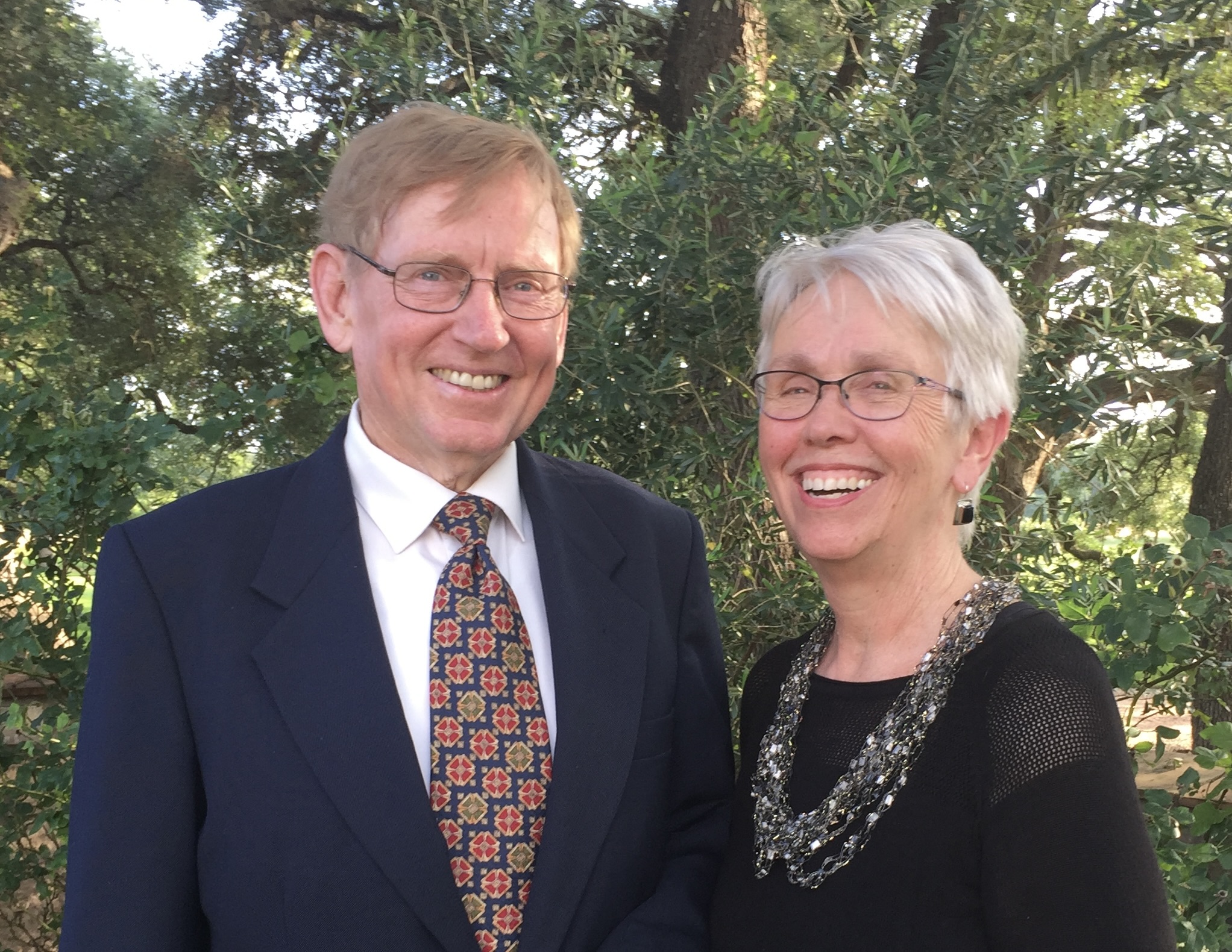
  2. Parent & Child Dedication Class

    › Children's Ministry

    Dear Parents of Hope,

    Have you recently added a child to your household? Is it time for you to dedicate yourself to raising this little person in ways that honor the Lord Jesus? Are you looking for support and encouragement as you labor to create a Christian home for your family?

    You are invited to join Pastor Matt Ryniker in a conversation about why we dedicate our children and how we can walk out our commitment faithfully. We’ll also discuss common parenting issues and have a time of questions and answers. Couples are encouraged to attend these classes together.

    We will meet on Wednesday, October 25 from 6-7:30pm.

    The dedication service is scheduled for Sunday, November 12, 2023

    Sign up for the classes and childcare by contacting Hala.

  3. Deuteronomy 32:3-4 — The God of Story, Revelation, and the Exodus | Amy Cogdell

    › Sermons

    New to Hope? We’re glad you’re here! Text the word WELCOME to 512-777-1826 to connect with our welcome team!

    The big idea

    God is a storyteller, and he has told us how the story runs. Four times in Scripture he handed a
    man the outline of an entire age — Abraham, Moses, Daniel, John — so that we would know where we
    are standing. We are standing in the last chapter, and revelation is not a rare gift for mystics.
    It is the birthright of every child of God.

    Key takeaways

    • Theology interprets story; story does not bend to theology. We are not clever enough to work
      God out from first principles, so he reveals himself — and he wants to.
    • Revelation means making known what was hidden. You tell your secrets to people you trust, so
      if you want revelation, become a friend of God.
    • Faith is a response to revelation, and faith grows on continued revelation. Where revelation
      stops, faith goes stagnant.
    • Personal revelation is revelation with a little r. It guides a life. It is never the basis
      for doctrine.
    • Four canonical revelations chart four acts: Abraham to the Exodus, the Exodus to the
      captivity, the captivity to Rome, and Christ’s coming to his return.
    • The Rock that shattered the statue in Daniel was already nine times over the hero of the song
      Moses sang. Clues for reading one chapter sit in the chapter before it.
    • The plagues in Revelation fall the way the plagues in Egypt fell — on the world, not on God’s
      people. Wrath is not our portion; separation is its purpose.
    • The church has not replaced Israel in God’s affections. We have been wrapped into a love that
      was already burning.

    ▶ 1:06:53

    Amy opened by saying the timing was not hers. She had felt the Lord stirring a message
    in her seven or eight weeks earlier and decided it would be presumptuous to phone Matt and ask for the
    pulpit, so she prayed instead. A few days later Matt called her. Then she asked the room to raise a
    hand if they liked a good story.

    1. Theology interprets story — never the other way around

    ▶ 1:08:21

    We are wired to love stories because we are made in the image of God, and nobody loves a story more
    than the God of Abraham, Isaac and Jacob. He designed the whole mystery of human salvation to play out
    as a drama — tragedy, treachery, wars, defeats, romance, a triumphant ending — and then paid us the
    honor of writing us into it. Our choices are real. They move his heart or grieve it; they bless people
    or harm them. And all of them run inside the banks of the great river he is writing.

    “We cannot understand the significance of our own lives, and we cannot understand God, apart from
    story,” Amy said. “Theology interprets story, never the other way around.” We are not smart enough to
    figure him out. He is transcendent, he lives in eternity, we live in time — so everything depends on
    his willingness to disclose himself. Which, she said, is the wonderful part: he wants to be known, he
    wants to be loved, and he wants to live with us where we can see his face.

    2. Revelation is your birthright

    ▶ 1:10:23

    The word sounds mystical, or apocalyptic, and it is neither. To reveal is to make previously secret
    information available. You do it constantly — with people you trust. “If you want revelation, you need
    to become a friend of God. The closer you walk with God, the more revelation you will receive.”

    Jesus’ whole life worked this way. The parables made the kingdom plain. Cleansing the temple
    revealed the Father’s jealousy for a house of prayer for all nations. The cross revealed his love and
    his justice at once; the resurrection revealed his intention to live with us forever. Then he sent the
    Spirit to keep it going — calling his words to mind, convicting of sin, comforting.

    ▶ 1:12:40

    “What no eye has seen, nor ear heard, nor the heart of man imagined, what God has prepared for
    those who love him — these things God has revealed to us through the Spirit. For the Spirit searches
    everything, even the depths of God.”

    1 Corinthians 2:9–10

    “Simon Peter replied, ‘You are the Christ, the Son of the living God.’ And Jesus answered him,
    ‘Blessed are you, Simon Bar-Jonah! For flesh and blood has not revealed this to you, but my Father
    who is in heaven.’”

    Matthew 16:15–17

    ▶ 1:13:40

    Amy’s claim was that nearly everyone in the room has had that same revelation. At some point you
    became convinced Jesus was the Messiah — not because you grew up in church, not because you read it,
    but because God showed you and your spirit answered. “Faith is a response to revelation, and faith
    grows with continued revelation. If your revelation does not continue, your faith gets stagnant.”
    Which is why Paul assumes it in the gathering — each
    one has a psalm, a teaching, a revelation
    — and prays for it by name:
    a
    Spirit of wisdom and of revelation in the knowledge of him
    . It is also practical enough to
    redirect an itinerary:
    “I
    went up because of a revelation.”

    3. Little r and capital R

    ▶ 1:16:37

    Personal revelation is a gift that weaves one life into the big story.
    Anna
    and Simeon
    were in the temple the day Jesus was carried in because of it. Brother Andrew smuggled
    Bibles into communist Europe on it. Amy’s son Noah had one at fifteen — that he would not live his
    whole life in America — and it worked as a guidepost, a thread that later made sense of things. But it
    is revelation with a little r, and it is not the basis for doctrine.

    Capital-R Revelation is canonical, written into Scripture, and Amy said there are four of it: four
    men, alongside John, whom she would call revelators, because God showed each of them an entire section
    of salvation history. “Canonical revelation is like a road map of God’s faithfulness.”

    4. Four chapters

    ▶ 1:17:48

    The first goes to Abraham, before Isaac exists, before there is a single descendant to be
    afflicted:

    “Know for certain that your offspring will be sojourners in a land that is not theirs and will be
    servants there, and they will be afflicted for four hundred years… and afterward they shall come out
    with great possessions.”

    Genesis 15:13–14

    ▶ 1:18:57

    Abraham’s vision ran as far as the Exodus, and Moses walks on stage to complete it. Then, at the end
    of his life, with Israel about to cross over, Moses is handed the second chapter as a song — and it is
    a disturbing one. It opens on God’s tender love and how he drew Israel out, and it ends with idolatry,
    a refusal to listen, Gentile nations raised up to subdue them, and a captivity from which their hearts
    finally turn back
    (Deuteronomy 32).

    ▶ 1:20:13

    Judah falls to Babylon in 586 BC, exactly as sung. And there in Babylon God finds a faithful young
    Jewish man and takes him into his confidence. Daniel interprets Nebuchadnezzar’s dream and later sees
    his own visions; the symbols differ, the interpretation holds — a succession of kingdoms rising and
    falling, each subjugating Israel in its turn. Gold head, Babylon. Silver shoulders, Persia. Bronze
    waist, Greece. Iron legs, Rome. And then a rock cut without hands comes out of nowhere, smashes the
    feet, and grows until it fills the earth
    (Daniel 2:31–45).

    ▶ 1:22:57

    Much of what Daniel saw baffled him. Amy suspects the rock did not. He was a scholar picking up
    exactly where Moses left off, and the word rock appears nine times in Moses’ song:

    “Ascribe greatness to our God! The Rock, his work is perfect, for all his ways are justice… But
    Jeshurun grew fat, and kicked… he forsook God who made him and scoffed at the Rock of his salvation.
    You were unmindful of the Rock that bore you… How could one have chased a thousand, and two have put
    ten thousand to flight, unless their Rock had sold them?”

    Deuteronomy 32:3–4,
    15–18,
    30

    The lesson she drew from that: clues for interpreting one chapter of history are planted in the
    chapter before it. “God is the God of symbol and foreshadowing. He knows how to write a good story.”

    5. This is our chapter, and it is the last one

    ▶ 1:24:10

    With the birth, death and resurrection of Jesus the fourth act opened. The Rock has struck the
    statue, and it is still growing across the earth. We know it is the last act because the prophet given
    to interpret our times is John, and his Revelation addresses the people of God from the ascension to
    the return.

    “The revelation of Jesus Christ, which God gave him to show to his servants the things that must
    soon take place… Blessed is the one who reads aloud the words of this prophecy, and blessed are those
    who hear.”

    Revelation 1:1–3

    ▶ 1:24:40

    As with Abraham, Moses and Daniel, parts of it will only clear up once the story is over. The basic
    message does not need to wait: the church grows, the church is opposed, our work is patient endurance,
    and Jesus returns to judge the world, free his people and hold a feast like no other.

    6. Galveston

    ▶ 1:26:22

    Here Amy told her own story, and flagged it carefully as a little r. In 2016 she and her friend
    Caroline Owens left town for an unstructured weekend of prayer at a borrowed house on the beach. The
    Lord’s presence met them at the threshold “like he had been waiting for us, and like he had an agenda.”
    They dropped the groceries on the porch and fell into prayer.

    The agenda turned out to be a thorough inventory of the sins and shames and wounds of her youth —
    gutting, exhausting, tender, sorrowful in a beautiful way. She kept waking through the night to more of
    it. In the morning Caroline asked what the Lord was telling her to do, and the answer frightened her:
    he wanted her to look up at him. Nobody sees the face of God and lives. She waited. Caroline asked
    again. So she settled on a compromise — she would simply ask him to show her whatever he wanted.

    ▶ 1:29:57

    She expected the face of Jesus, or a kindly old man with a beard telling her everything was fine.
    What she saw was a column of flaming fire, red and gold, with eyes in the flames — and she knew it was
    the pillar that led Israel out of Egypt. “I have never in my life seen anything so beautiful, so holy,
    so beyond my comprehension. I could not conjure that up. I am not that creative.” What astonished her
    most was the arithmetic of it: why are you talking to me about my life, when this is who you
    are? Why do you care about a housewife in Texas?

    ▶ 1:31:19

    Her fear of death went that day and has not come back. “At the end of time I am going to see God as
    he is, and there will be no room for regret. Nothing unsatisfied.”

    7. “For my bride I part the waters”

    ▶ 1:32:36

    She went to bed early, slept an hour, and was woken again — tenderly this time. Amy, come out on
    the porch with me.
    She had never been at the beach at night. A full moon hung low over the water.
    Then he said it: for my bride I part the waters.

    ▶ 1:33:23

    What followed she described as full panoramic vision. The pillar of fire moving to the rear guard,
    the eyes shooting warnings out at a terrified Egyptian army
    (Exodus 14:19–20).
    Red and gold light flashing off chariots and off the water — and not only off the surface, because the
    wind was driving the sea back, so the light danced in the middle of the walls of water. And it flashed
    off gold, because the Lord had decked his slaves out in necklaces and bracelets like a bride on the
    night of her deliverance. More than a million people lined up at the sea, and not one of them slept.
    “There has never been a spectacle like the Exodus on this earth, and there will never be anything that
    glorious again until the Lord parts the skies and comes for his people. It will be the greater
    Exodus.”

    ▶ 1:35:03

    Then the vision broke her heart. She heard him say: I loved Israel like a bride, but she
    wouldn’t look up to me. She couldn’t look up to me.
    Within weeks that same gold would be melted
    into a calf
    (Exodus 32:1–6).
    She sat in the living room and wept as she never has before or since — “because I was caught up in
    God’s story and not in my own.”

    8. What she understood about Israel, and the morning after

    ▶ 1:37:04

    “To love God is to love what he loves, and to desire what he desires.” What he desires, she saw, is
    that Israel look up and receive him as savior and groom. “The church has not replaced Israel in the
    Lord’s affections. On the contrary — we have been wrapped up into that incredible, passionate love.”

    ▶ 1:38:45

    At five in the morning she went to bed with instructions to walk the beach at six. She was groggy
    and got up anyway. The sky turned pink, then gold. A man walked past her in the surf, turned back, and
    said it was a beautiful morning. She agreed, with tears in her eyes. “It’s the most beautiful morning
    of the year,” he said — and she knew. She ran back to the house and phoned Thomas, because there was no
    internet, and asked him to check the calendar. It was Passover. She had known nothing about the Jewish
    calendar. “The Lord allowed me to keep vigil with him on the anniversary of the day he led Israel out
    like a groom.”

    9. Revelation echoes Exodus

    ▶ 1:40:41

    From her friend Mark Kinzer she learned how closely John’s book tracks the book of Exodus, and the
    parallel is not decoration — it tells you how to read. The plagues of Revelation recall the plagues of
    Egypt, and those plagues were not sent on Israel.

    ▶ 1:41:17

    “The wrath of God is not meant for his people. It’s meant to separate his people from the world.”
    She was careful not to promise comfort she had not been given: Israel suffered while Egypt suffered,
    and we will suffer too. But we are not under wrath. The
    two
    witnesses who call down plagues
    should remind you of Moses and Aaron; the
    woman
    fleeing into the wilderness
    should remind you of Israel in the desert. Meditating on the Exodus
    drives out fear and hands back hope.

    10. Seek revelation. It is yours.

    ▶ 1:42:22

    Amy addressed the young adults directly, and admitted she has been doing this by the shoulders since
    2016: “The story is real. It’s all real. Hang on. God is going to blow your mind. Become his friend.
    Seek revelation — it is your birthright.”

    ▶ 1:43:41

    Then a word to the church, taken from the letter to Ephesus —
    remember
    your first love, and do the things you did at first
    . Hope Chapel is a worshipping church, she said,
    but somewhere in the last year post-Covid we got slack about showing up on time and slack about
    pressing in. “We open ourselves up to revelation when we enter into worship.” She closed by praying
    Paul’s prayer over the room, asking God to undo the fear of death and to show his beauty, and invited
    anyone who wanted more revelation to come forward — or, if that felt like too much, to pray where they
    sat. “He loves shy people too. I’m a shy person.”

  4. Revelation 3:14-22 — Laodicea and the Marriage Supper

    › Sermons

    New to Hope? We’re glad you’re here! Text the word WELCOME to 512-777-1826 to connect with our welcome team!

    The big idea

    Laodicea is the one church Jesus finds nothing good to say about. And that same letter
    hands them free gold, clean clothes, working eyes, a place at his table and a seat on his
    throne. Judgment against sin, free goods and a great meal is a pattern God has run
    before — and wherever it appears, grace is what it is for.

    Key takeaways

    • Every church heard every letter. Laodicea’s came last, and it was the hardest to sit
      through — no commendation, no faithful remnant singled out, nothing.
    • “I am rich, I have prospered, I need nothing” is a quotation, not a coincidence. Ephraim
      said it first in Hosea, and God was not fooled then either.
    • Cold and hot are both good. The problem with lukewarm is not half-heartedness measured
      against zeal — it is that it is unpleasant to drink.
    • “I will spit you out of my mouth” is what the land does to its inhabitants in Leviticus.
      Jesus takes the promised land’s own line and applies it to his body.
    • “Behold, I stand at the door and knock” carries an urgency we miss: in Song of Solomon
      the bride takes too long to get up, and when she opens the door he has gone.
    • The three moves in this letter — judgment, free provision, a feast — recur in Isaiah, in
      2 Kings, and at the end of Revelation. They belong together.
    • The worst church in the seven receives the strongest promise in the seven: not a seat in
      the back, but a seat on the throne.

    ▶ 1:21:03

    Hope has been reading through Revelation, a book Matt described as belonging to
    us as an inheritance even when it perplexes us — and this week brought the last of the seven
    letters, which he called “really paradoxical and difficult to read.”

    The letter with no commendation

    ▶ 1:23:30

    The letters follow a shape: an address to the angel of the church, a description of Jesus
    fitted to what follows, an encouragement, a rebuke, a promise to the one who conquers, and the
    closing line about ears. These went to real cities and real congregations, and because all seven
    were bundled together, every church read every other church’s mail. Laodicea’s came last. It is
    one of only two with no encouragement in it at all.

    “I know your works: you are neither cold nor hot. Would that you were either cold or hot!
    So, because you are lukewarm, and neither hot nor cold, I will spit you out of my mouth. For
    you say, I am rich, I have prospered, and I need nothing, not realizing that you are wretched,
    pitiable, poor, blind, and naked.”

    Revelation 3:15–17

    Matt paused on the opening description — “the beginning of God’s creation” — to close a door
    before anyone walked through it. It is no hint that Jesus began. It is that the new creation
    starts in his body: he is ground zero for God’s remaking of everything. Which matters here,
    because in this darkest of the seven there is “a secret grace that is an unbelievable joy to
    those who have the ear to hear it” — in the Son’s own body, pain and blood and death make
    something new.

    Three themes that have travelled together before

    ▶ 1:27:39

    The letter can feel scattered. Matt organised it into three: God’s judgment against sin, an
    offer of free goods, and a dinner invitation. Nothing obvious connects those three — except that
    they have appeared as a group at least twice in the Old Testament and once more at the end of
    Revelation. Finding where else God has done this is what turns the lens.

    “Ah, but I am rich”

    ▶ 1:28:15

    Someone confronted over sin, answering that they are wealthy and doing fine — we have seen
    this before.

    “Ephraim has said, ‘Ah, but I am rich; I have found wealth for myself; in all my labors they
    cannot find in me iniquity or sin.’”

    Hosea 12:8

    The chapter around it is bloodshed, iniquity and idolatry — obvious from God’s side of the
    table, invisible from Ephraim’s. “There’s no record of wrong here, nothing to see here folks,
    move along, I’m doing just fine,” Matt said, and then admitted the arrogance was one he could
    relate to. So when Jesus says to Laodicea you say I am rich, he is quoting the most
    spiritually blind sentence in the prophets back to them.

    The contrast with the letter they had just heard read is sharp. To Smyrna, Jesus says he sees
    their poverty, yet they are rich (Revelation 2:8–11).
    To Laodicea: I see that you see your riches, and you are poor. Smyrna refused the idolatry
    woven into the trade guilds and was shunned and impoverished for it. Laodicea was neither shunned
    nor cut off from the market — which, Matt suggested, is a fair guess at how they had decided the
    same question.

    The groom outside the door

    ▶ 1:31:35

    “Behold, I stand at the door and knock” gets read as gentle patience. Its source is not
    patient. In Song of Solomon the bride is in bed, half awake, and hears her beloved knocking. She
    has already bathed her feet; she does not want to get up and dress. When she finally opens the
    door, he is gone
    (Song of Solomon 5:2–6).
    The allusion carries a clock in it: I am what you need and I am right here — do not take forever
    repenting.

    Cold, hot, and the thing you spit out

    ▶ 1:33:33

    We tend to hear “cold” as the committed atheist — better a hard no than a soft yes. Matt
    pushed back. Why would Jesus rather you be an atheist? Cold and hot are both good: iced coffee
    and espresso, sweet tea and hot tea, a cold pool and a hot tub. Lukewarm is the one you spit out.
    “What he’s really saying is: yuck.”

    ▶ 1:35:32

    And that verb has a history. It is what the promised land does.

    “Do not make yourselves unclean by any of these things, for by all these the nations I am
    driving out before you have become unclean, and the land became unclean, so that I punished its
    iniquity, and the land vomited out its inhabitants.”

    Leviticus 18:24–25

    Leviticus 18 is the chapter on sexual purity. Leviticus 20:22
    says the same thing at the end of a chapter on idolatry — keep my statutes, that the land may not
    vomit you out. Those two sins are exactly what Jesus names in the other letters, in the Jezebel
    group, the Nicolaitan group, the Balaam group. Here he does not spell them out. He does something
    more pointed: he takes on the identity of the land itself. I will spit you out of my mouth — out
    of my body. Like salt that has lost its taste
    (Matthew 5:13),
    good for nothing, thrown out.

    Then he offers them things for free

    ▶ 1:39:19

    Gold refined by fire is not metal — in Job 23:10
    and Malachi 3:2–3
    it is what comes out the other side of God’s refining. But the sharper question is the one Matt
    asked next: how do you buy anything with no money? Where have we seen that?

    ▶ 1:39:59

    “Come, everyone who thirsts, come to the waters; and he who has no money, come, buy and eat!
    Come, buy wine and milk without money and without price. Why do you spend your money for that
    which is not bread, and your labor for that which does not satisfy? Listen diligently to me,
    and eat what is good, and delight yourselves in rich food.”

    Isaiah 55:1–3

    “This is not a trick,” Matt said — not cheese on a cartoon rat trap. And look at who is being
    offered it. Isaiah’s audience is not the sensitive and spiritual; it is faithless shepherds, a
    treacherous lot. They get invited to a free meal, and the substance of the meal turns out to be
    God himself.

    Judgment, and then a feast for everybody

    ▶ 1:42:55

    The same three moves sit together earlier in Isaiah. Chapter 24 opens with the Lord emptying
    the earth and making it desolate
    (Isaiah 24:1);
    kings are gathered like prisoners in a pit, sun and moon confounded. And then:

    “On this mountain the Lord of hosts will make for all peoples a feast of rich food, a feast
    of well-aged wine, of rich food full of marrow, of aged wine well refined… He will swallow up
    death forever; and the Lord God will wipe away tears from all faces.”

    Isaiah 25:6–9

    The peoples gathered up in the judgment are the same peoples gathered for the party. And the
    feast reflects the host, not the guests — Zechariah 9:16–17
    says they shine like the jewels of a crown, and then asks how great is his goodness, how great
    his beauty.

    The Syrian soldier who got dinner

    ▶ 1:46:13

    Matt’s favourite version of the pattern is in
    2 Kings 6.
    Syrian raiders keep missing their ambushes because Elisha keeps announcing them, so the king
    sends an army to take out one prophet in a hut. The story usually stops at the horses and
    chariots of fire around Elisha. Matt kept going. Elisha blinds them, leads them like children
    into Samaria, and the king of Israel — with an eagerness Matt compared to a wolf over trapped
    prey — asks, shall I strike them down? No. Feed them and send them home.

    He told it from inside the Syrian ranks: marching somewhere random, spacing out, snapping to
    in a fort that is not yours, surrounded by drawn bows, sword still down, watching them move
    furniture and realising it is tables. “We are completely and utterly subdued by dinner.” The
    soldier goes home uninjured, and his wife asks how the raid went. They threw a party for us.
    It looked like a wedding, and they sent us home in peace.
    The text adds that the Syrians
    stopped raiding — and Matt’s imagined soldier adds the reason: Israel’s God is strong, but good.

    Where the pattern is going

    ▶ 1:52:37

    “Hallelujah! For the Lord our God the Almighty reigns. Let us rejoice and exult and give him
    the glory, for the marriage of the Lamb has come, and his Bride has made herself ready… Blessed
    are those who are invited to the marriage supper of the Lamb.”

    Revelation 19:6–9

    The angel has to tell John twice that these are the true words of God, which Matt found
    entirely reasonable: “Seriously, man, this is really going to happen?” The judgment that follows
    is real — the rider subdues his enemies. But even while Babylon falls, the message going out is
    “Come out of her, my people”.
    The destruction is not aimed at the people caught up in it;
    he is not willing that any should perish.
    There is a way out, and it leads to a table.

    ▶ 1:55:57

    “Behold, the dwelling place of God is with man. He will dwell with them, and they will be
    his people… He will wipe away every tear from their eyes, and death shall be no more… Behold, I
    am making all things new… To the thirsty I will give from the spring of the water of life
    without payment.”

    Revelation 21:1–6

    Judgment leading to new creation, a people redeemed out of wickedness, and a great meal with
    no cost to the invited. Laodicea’s letter, 2 Kings 6, Isaiah 25, the last two chapters of the
    Bible — the same three things, every time.

    The largest promise in any of the seven

    ▶ 1:57:50

    Matt asked the room to feel what it would have been like to sit in that service. You have
    heard the other six letters read out. Yours is last, and it is the one where he does not even
    threaten to remove your lampstand — it almost reads as though he already has. “He barely talks
    about us like we’re a church.” And then the groom is at the door asking to be let back in, and
    the sad and sorry lot is handed a dinner invitation.

    ▶ 2:00:49

    It would be one thing to be told you could tag along in the nosebleeds and be grateful you got
    in at all. That is not the ending. “To the one who conquers, I will grant him to sit with me on
    my throne, as I also conquered and sat down with my Father on his throne.” The worst church on
    the list gets the biggest promotion on the list — and the overcoming is by his work, not their
    status or their wealth. Matt closed by praying for grace to repent, for eyes opened to the glory
    of God’s generosity, and for the marriage supper of the Lamb: come, Lord Jesus.

  5. Cotton Hance Celebration of Life Service Thursday, Oct. 19, 2023

    › Community Updates

    Join us for the celebration of the life of our dear Cotton Hance, with reception to follow.

    Children are welcome but there will be no childcare provided. A light lunch reception will follow in the Family Room. The service will be live streamed here.

    RSVP on Realm. You can also sign up to bring light snacks, help set up and/or clean up. (If you’ve already RSVP’d you can go back in and click “Manage RSVP Details” to sign up to bring something/help as you’re able.)

    View Cotton’s online memorial page here.