Titus 3:1-3 — Teach Sound Doctrine. There is One Source of Life. It’s Christ. Christ is life for a broken world. Titus 3 – Summation of Titus
August 30th, 2020 › SermonsChrist is life for a broken world. (ESV)
Titus 3:9 But avoid foolish controversies, genealogies, dissensions, and quarrels about the law, for they are unprofitable and worthless.
Elders must care for and make sure the church stays unified and protected from the accusers and teachers of false doctrine.
Titus 1:5 Qualifications for Elders – This is why I left you in Crete, so that you might put what remained into order, and appoint elders in every town as I.
Titus 3:1-3 Remind them to be submissive to rulers and authorities, to be obedient, to be ready for every good work, 2 to speak evil of no one, to avoid quarreling, to be gentle, and to show perfect courtesy toward all people. 3 For we ourselves were once foolish, disobedient, led astray, slaves to various passions and pleasures, passing our days in malice and envy, hated by others and hating one another.
______________________________________________
New to Hope? We’re glad you’re here! Text the word WELCOME to 512-645-1980
__________________________________________
Online Giving text HOPEATX to 73256
Full Service available on YouTube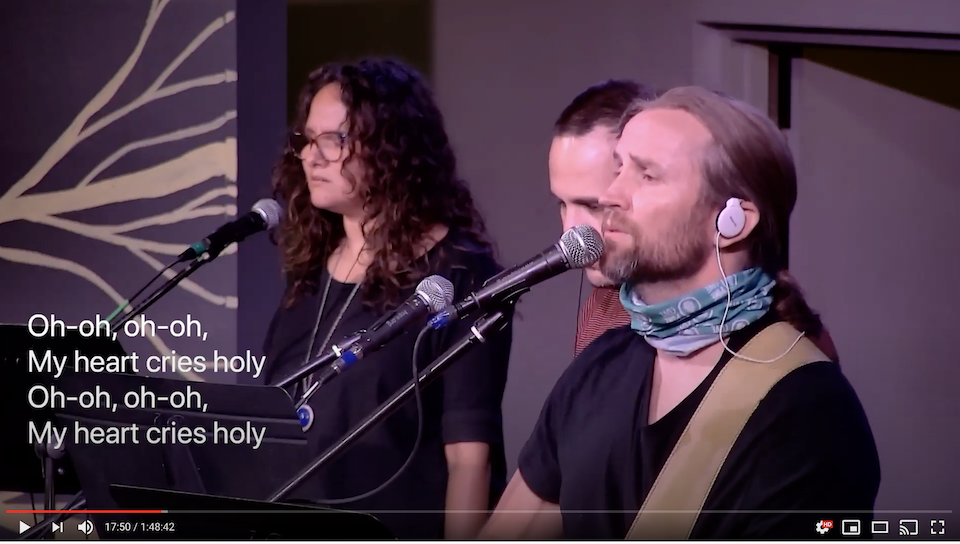
Online Giving text HOPEATX to 73256
The big idea
Our unity is not in singing the same song or liking the same people; it is in being grafted into the same vine, Jesus Christ. That is why Paul tells Titus to confront division directly and repeatedly. Discipline done well is harsh only to the wolf, and it protects the connection to Christ that every good work depends on.
Key takeaways
- Paul’s “trustworthy word” is not just the sentence before it but the whole apostolic gospel – and at the very center of that message is Christ himself.
- Quarrels and dissension do not die down on their own. Someone has to confront them, which is why an elder must be good at direct confrontation and slow to anger.
- A shepherd who protects the flock will be harsh with the wolf. That is not harsh to the sheep; it is love for them.
- A parent who lets a child obey only when they feel like it sets that child up to fail at obeying a God they cannot see, who sometimes asks very hard things.
- Godly discipline is not bondage, and accountability is not slavery. It reminds us that Jesus is not only our buddy but our King.
- Fruit without connection to the vine is an absurdity. There is no such thing as us doing good in our own power.
- The world’s version of virtue is often exposing what is bad. God’s version is spending yourself for the hungry and the oppressed and giving up the pointing finger.
It was baby dedication Sunday, and Matt greeted the people watching online – “and if you’re watching in the distant future, help us, we’re trapped in 2020.” He asked the church to make praying for peace in the nation a routine, told a dad joke (“I don’t trust stairs. They’re always up to something”), and turned to the last section of Titus.
The end of the letter
Matt read the closing verses straight through; most of it, he said, is self-explanatory.
“The saying is trustworthy, and I want you to insist on these things, so that those who have believed in God may be careful to devote themselves to good works. These things are excellent and profitable for people. But avoid foolish controversies, genealogies, dissensions, and quarrels about the law, for they are unprofitable and worthless. As for a person who stirs up division, after warning him once and then twice, have nothing more to do with him, knowing that such a person is warped and sinful; he is self-condemned.”
The letter closes with travel plans – “I have decided to spend the winter there,” which Matt joked is his life verse – and one more charge:
“And let our people learn to devote themselves to good works, so as to help cases of urgent need, and not be unfruitful. All who are with me send greetings to you. Greet those who love us in the faith. Grace be with you all.”
The themes: good works built on a faithful word, the dark contrast of pointless quarreling, a stern warning to divisive people, and a finish of love and grace. Some of it may sound harsh, so Matt set out to explain why elders must confront directly, and why unity matters at all.
1. What is the “trustworthy word”?
Titus opens with “the knowledge of the truth, which accords with godliness” and God’s word “manifested” at the proper time (Titus 1:1–3). “Word,” Matt explained, can mean a whole message, not just a phrase – so “the saying is trustworthy” points past the sentence just written.
Matt traced the word “faithful” or “trustworthy” through the letter. An elder must hold firmly to the trustworthy word as taught – the apostolic gospel (Titus 1:9). An elder’s children are to be “believing,” the same root, and not open to the charge of insubordination (Titus 1:6). Servants are to show “all good faith,” so that they adorn the doctrine of God (Titus 2:9–10).
So the faithful word of 3:8 is the clear, fully declared message of the gospel – though Titus 3:4–7 is an excellent summary of it. “The gospel is trustworthy because it’s the very knowledge of God,” he said. “At the very center of this message of Christ is Christ himself.”
2. Why somebody has to confront
Against that stand verses 9 and 10. Matt wanted to talk about discipline in church life, “not just because it’s the text I’m supposed to be preaching from, but because it is manifestly important.”
Here is the thing about humans: quarrels and controversies “don’t have a natural tendency to die down on their own and become healthy.” Someone who routinely stirs up division will not see the light after a tiny or passive rebuke. “Somebody ought to confront it directly, because you’re left with no choice.” That is why an elder has to be good at direct confrontation, and why Paul looks at his family: disobedient children would be a red flag that he is not. In Crete, a rebellious, insubordinate attitude was starting to ruin the body.
You do not want a mean-spirited elder; that is why Paul rules out one who is quick to anger. But some of it is supposed to be harsh. A shepherd with a wolf nearby has to choose who something harsh will happen to. Maybe a thrown rock or a loud noise is enough. “But if he comes really close to the sheep, baring his teeth, you need to smack it. So you say, wow, that’s harsh. Well, it’s not harsh to the sheep. It is harsh to the wolf, and I’m okay with that.”
He saw it as a teacher. He was strict, but the students who were there to learn never felt his rough side; the ones tormenting the kids around them did. If he had done nothing, the learners would have felt those students’ rough side instead. You will meet conflict either way, so align yourself with what God feels about things:
“He must hold firm to the trustworthy word as taught, so that he may be able to give instruction in sound doctrine and also to rebuke those who contradict it.”
Someone named Tilden made a point in the live chat that Matt picked up: both sides are love. It is loving to protect the sheep, and a wise person who is rebuked perceives it as love, “because that’s what it is.”
3. Why unity matters
First, because God cares about us. He does not gather us because he needs music – “he’s got an angelic choir, he could at least have an iPod.” There is something incarnational about being a body, and tearing it apart destroys the very work of God.
Second, because we bear a message, and the most important thing about it is the person at its center. “We don’t just have unity because we sing in the same key,” Matt said. “It’s not from holding hands, looking each other in the eye and singing kumbaya. Our unity is that we are mutually included, grafted into the very same vine, Jesus Christ. Our unity is in the risen Lord.” If infighting and silly myths drown that out, we are not broadcasting it clearly – and there really is sin, darkness and pain in the world, “and there’s really only one physician.”
A rebellious attitude is far more unhealthy than we think, because it bucks against what God himself is doing. God resists the proud, and if he is our healer, arrogance only harms us and the people who need our message. So Paul tells Titus to straighten out what was unfinished in Crete, where rebellious people were ruining whole households (Titus 1:5–16). “If you didn’t care about a church, I suppose you would just leave all that unchecked.”
4. An example from the family
Since it was baby dedication Sunday, and since Paul himself raises the family, Matt took parenting as his example. “I personally discipline on purpose, not accidentally.” Children do not know much, and there is a bent toward sin, “and it’s not cute at all for a grown-up to not know anything about how to treat people.” The worst thing he could do, he said, is let his kids slowly grow into heathens by nurturing them in always doing what they want, in a world of “unmitigated, unfettered, constant self-gratification.”
So they say please and thank you, do their own laundry, empty the dishwasher and come to church, whether or not they feel like it. He is clear, not rude.
The reason is where it leads. “They can see me, they can hear my voice, I’m right in front of them, and the things I ask them to do are very easy – like, do your laundry, please. If they can’t even get over a rebellious attitude against me, and they can see me, then I’m setting them up for failure in obeying a God who sometimes asks you to do very difficult things, who you can’t see.” And most of what we cling to in rebellion is poison. “Rebellion is one of the worst things you can live in.” Elders, likewise, must keep an active, deliberate eye on a congregation.
5. The hired hand
Matt read Saint Augustine on the hired hand who flees when he sees the wolf: the leader who will not openly rebuke a grievous sinner because the man might become an enemy, make plots, do harm. Such a leader seeks his own things – the advantage of a human friendship – and not those of Jesus Christ. “He is quiet; he does not correct. Look, the wolf seizes the sheep’s throat… You are silent; you do not scold. O hired hand, you saw the wolf coming and you fled.”
“Godly discipline is not the same thing as bondage,” Matt said. “Accountability is not slavery.” It reminds the church that Jesus “is not just our buddy, but a king.” The church is not the elders’ personal community group; they serve at the pleasure of Christ, because it is his own body.
Some communities fixate on doing good “while their roots are disconnected from the soil. It’s an absurdity.” You do not produce fruit separated from the vine. God would not need to discipline us as sons if we were not his sons (Hebrews 12:7–8). “I don’t want us to like Jesus for what he does for us or what he means to us personally,” Matt said, “but for who he really is. And one of the things he really is, is King.” Done well, all of this is harsh only to the wolf.
6. Good works as God defines them
Verse 14 asks the church to learn to devote itself to good works, because it is not our natural mode. On our own we are dead; fruit happens when we are connected to Christ. Divisive people do not label themselves, Matt observed – “I wish they would. Hey, by the way, I’m about to give you some toxic stuff.” Often they are not even aware of it, which is why a church needs vetted elders who watch.
He warned that the secular religious impulse of the day is less about doing anything substantively good than about making sure you are not bad, and exposing what is. So he turned to the chapter on true fasting:
“If you do away with the yoke of oppression, with the pointing finger and malicious talk, and if you spend yourselves in behalf of the hungry and satisfy the needs of the oppressed, then your light will rise in the darkness.”
Isaiah 58:9–10 (NIV)
Our culture tries to do away with oppression by pointing the finger and talking maliciously, but God puts the pointing finger and malicious talk in the same yoke he wants to lift. Too often we just show ourselves “not that bad compared to other people, in ways that don’t go anywhere.”
Another comment from the live chat struck him: Peter did not know he was being divisive when he rebuked Jesus; he probably thought he was helping, and Jesus said, “Get behind me, Satan”. We are not always aware of what comes out of us. So we do not do the body by ourselves – “which, by the way, is a cell, not a body.” We stay in accountability and submission to Christ, directly and through the leaders he places, because that is where our fruit is.
Even Paul’s farewell – “greet those who love us in the faith” – says the same thing. Loving people is not our natural tendency either. “Often you’re like, I don’t want to do that, I don’t like that person, they’re super mean and weird. We love each other even in that, in the faith.” From beginning to end, Titus is about Christ.
One source of life
He prayed that God would keep the church grafted into Christ and cut out roots of bitterness, quarrels and division, here and throughout the city and the world. Then a parting suggestion: read Titus aloud in one sitting – it takes under fifteen minutes. “Remember that there’s really only one source of life. It’s Christ. Stay connected to him.” Sometimes we do not even know we are wandering. “The reason why we encourage and fertilize and comfort and console and cultivate the life of Christ in each other, as an actual body, is because Christ is the main thing.”
