Ephesians 5:22-27 — What is Christian Marriage?
Leave a CommentWhat is Christian Marriage?
Paul interjected a Christ filled view into the world.Ephesians.5:21-24
Submission is very specific here.
There are 9 verses for the husband,3 verses for the wives.
Ephesians 5:22-27
Husbands give up your life.
Wives should submit freely on their own. Wives should choose to submit. Husbands can not demand it.Husbands make it hard for wives to submit.Submissions is a gift.Submission can not be earned.Only Christ can demand submission.It is always a gift to each other. Submission is not deserved.
This all is a great and joyful teaching. It is precious.
How did Christ love the church. He gave his life. Husbands should do the same.
______________________________________________
New to Hope? We’re glad you’re here! Text the word WELCOME to 512-645-1980
__________________________________________
Online Giving text HOPEATX to 73256
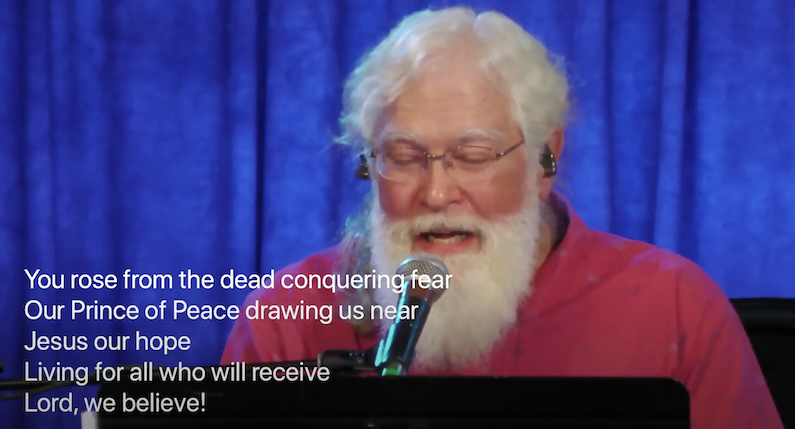
Link to Full Sermon –Worship Hope Chapel Austin Texas www.hope.org
The big idea
A marriage becomes Christian when the gospel is applied to it. Into a world where wives were transferred like property, Paul told wives to give submission and husbands to give their lives – two gifts that can be neither demanded, earned nor deserved, and that together make a marriage an object lesson of Christ and the church.
Key takeaways
- First-century marriage existed to build family wealth and transfer a woman from her father’s authority to her husband’s. Marrying for love was centuries away.
- In Ephesians 5, verse 22 has no verb of its own in Greek; it hangs on verse 21. Submission is what every Christian owes every other, and a wife offers it to her own husband – not women to men.
- Paul addresses wives, not husbands, about submission. Nowhere is a husband told to make his wife submit, so submission is always and only a gift.
- Headship means provider, protector and source – like the spring that is the headwaters of the San Marcos River – more than one who gives orders.
- “Love your wives as Christ loved the church” means a husband lays down his life. That too is a gift a wife cannot demand or earn.
- To sanctify a wife, Geno suggested, is to help her become all God designed her to be – which means knowing her well enough to walk beside her.
- Christian marriage is the gospel at home: the greatest becomes the servant, forgiveness is free, broken people get a new start, and shame is thrown out of the toolbox.
Geno said he came to offer a blessing, and he drew a line at the start. He was not talking about marriage as the culture now defines and legalises it, but about Christian marriage – and his answer to what makes it Christian was simple: “the gospel is applied to this institution.”
Marriage in Paul’s world
In the first century people married, or daughters were given in marriage, to increase a family’s wealth through a dowry, join powerful clans and produce legitimate heirs. “Our contemporary idea of marrying for love was not in view for another 1,700 years,” Geno said – “a very recent innovation, and not necessarily a good one.”
Wealthy Roman fathers arranged marriages so their daughters’ property stayed under the daughters’ control. Greek wives were heavily restricted – not allowed out of their quarters – while their husbands kept concubines; “a Greek wife was essentially owned by her husband.” Most Jewish households were poor, and there was a biblical tradition of women running households and businesses (Proverbs 31); women worked the fields beside their husbands and were valued for what they could do.
Across all the variations, though, the basic structure was the same: a woman and the increase she brought were transferred from her father’s authority to her husband’s. Into “that cultural stew” Paul spoke words that are traditional to us but were revolutionary when he set them loose in Ephesus.
The text, and the missing verb
This is the longest passage in the Bible on marriage. Most Bibles start a new paragraph at verse 22, which Geno called a translators’ choice. He began at verse 21:
“…submitting to one another out of reverence for Christ. Wives, submit to your own husbands, as to the Lord. For the husband is the head of the wife even as Christ is the head of the church, his body, and is himself its Savior. Now as the church submits to Christ, so also wives should submit in everything to their husbands.”
Verse 21 has the verb; verse 22 has none in the Greek. So verse 22 is a subset of verse 21. Every Christian walks in submission to every other – “no one is to lord it over anyone else, period” – and a wife offers that same submission to her own husband. “It’s not as though there’s a special submission of a wife to a husband,” and it is certainly not that women submit to men. “I cannot raise my voice loud enough to stop that idea.” He said it partly as repentance: he had once been one of the preachers who taught it otherwise.
Three verses go to wives, nine to husbands – “which I think means husbands are three times as thick.” More seriously: everyone already knew how marriage was supposed to go, and the power sat with the men. If Paul could get through to them, marriage would improve for the women.
“Husbands, love your wives, as Christ loved the church and gave himself up for her, that he might sanctify her, having cleansed her by the washing of water with the word, so that he might present the church to himself in splendor, without spot or wrinkle or any such thing, that she might be holy and without blemish. In the same way husbands should love their wives as their own bodies.”
“That’s radical right there, period,” Geno said. Men should have it “tattooed on the back of your eyelids.” Then Paul quotes Genesis 2:24:
“For no one ever hated his own flesh, but nourishes and cherishes it, just as Christ does the church, because we are members of his body. ‘Therefore a man shall leave his father and mother and hold fast to his wife, and the two shall become one flesh.’ This mystery is profound, and I am saying that it refers to Christ and the church. However, let each one of you love his wife as himself, and let the wife see that she respects her husband.”
Submission is always a gift
Then the subversive detail. Paul says “wives,” not “husbands, make your wives submit.” “Read with your eyes open, not with some imprint of the cultural context in which you grew up.” Nowhere is a husband given authority to cause his wife to submit, so when she does, she does it of her own accord.
Three things follow. A husband cannot demand submission. He cannot earn it; it is always obedience to Christ and a gift to him. And he does not deserve it – “you might deserve to be submitted to if you are a perfect husband, but you’re not.”
What is submission? To humble ourselves and, as Paul said, count others more significant than ourselves; to approach everyone who names Jesus with humility and tenderness; to let the least accomplished among us be valued as highly as the most. Jesus showed it in Gethsemane and at the well in Samaria. And nowhere does Paul tell wives to stay quiet: “It’s a foolish man that doesn’t listen to his wife, and it’s a foolish woman that doesn’t speak up to her husband.”
What headship means
Scholars have written a great deal on the word. In a military setting it means the one giving orders. In nature it means the source of something – like the spring in the middle of San Marcos where water bubbles up from the Edwards Aquifer and becomes the San Marcos River. It also means the one who provides for and protects a clan. Geno took all three together: a husband should rarely give orders, though someone should take charge in danger; he should provide and protect; and he should be “a source of joy and spiritual leadership.”
Most men marry young and immature, and their wives give them grace while they grow up. Too often women experience “oppression, arrogance, lovelessness” instead. “Men, I exhort you in the name of Jesus: grow up. Become like Christ. Learn to humble yourself.”
Love that lays down its life
At weddings Geno pauses after “as Christ loved the church” and asks how Christ loved it. Someone always answers: he died for her. That is exactly Paul’s meaning. There is no husband lording it over his wife anywhere in the apostle’s mind.
“It has nothing to do with ushy-gushy feelings and Hallmark cards. It has everything to do with: I’m tired, but I’m still going to treat my wife with grace and my family as the most important thing in the world.” A husband is not “a boss or a dictator or a general or a slug that comes in and throws himself on the couch.” Everyone knew a wife should subordinate herself; a husband giving himself up for his wife was what was radical.
The same three rules run the other way. Wives cannot demand that love – the text gives no permission. It is a choice he makes every day against his nature, and it is rare. Where it happens it is easy to spot: the husband is not the star of the show, he honors his wife above himself, and raising children is a chief occupation of his, not something shunted to the women – an attitude “so antithetical to Christ it sickens me.”
Nor can a wife earn his love, with sex or anything else; if he owes it, it is no longer a gift. “Instead receive his love as a gift and say thank you.” Tell him you noticed he did the dishes when you were exhausted – “thank you for loving me so well.” “They might hand you a credit card. I don’t know.” And she does not deserve it either, because she is not perfect.
“Christian love means that we love the beloved when he or she is unworthy of the love.” So the glorious vision: wives freely giving their husbands what they don’t deserve, husbands freely giving their wives what they don’t deserve – “both all in, whole hog, 100 percent.”
To sanctify her
To sanctify is to make holy – set apart for God. What it means for a husband to sanctify his wife, “nobody knows… everybody’s guessing.” Geno’s guess: “it’s the husband’s responsibility, a special responsibility, to help his wife become all that God has designed her to become.” After years with you she should be more holy than when you married. “My observation is the opposite is true most of the time.”
Practically, a husband needs “an MRS degree in our wives – a doctorate in her.” Know her so well – her girlhood, her teenage struggles, what happened as a young woman – that you can say, gently, I don’t think that’s good for you, and explain why. Not telling her what to do, but walking beside her. “She wants you to know her better this year than you did last year.”
Geno said he learned things about his wife twenty years in that he did not know in year one, because it took that long for her to trust him with them, and it changed how he speaks to her and treats her.
So, homework for husbands – “don’t be oppressive about it.” Ask her: What goals do you have that I can help you fulfil? What’s your bucket list? What are you most afraid of? If you are brave: how do I frighten you, so that I can change? And: where do you feel far from Christ, and how can I help you draw near?
The one-flesh mystery
Paul calls the one-flesh union a mystery that refers to Christ and his bride. Geno took it to mean that every marriage is an object lesson of Christ and the church – “a place where the gospel can be seen working itself out in friendship and self-denying actions.”
Which gospel?
He ended where he began: Christian marriage is the gospel applied to the culture’s institution. “What gospel, Geno?” Five answers:
- The gospel where the most important person becomes a slave to all – as Jesus laid down his life on the cross that we might be set free.
- The gospel of laying down one’s rights and one’s life so that others might flourish.
- The gospel where forgiveness is freely offered to the offender, and unmerited mercy releases him from debtor’s prison. He had seen marriages where one or both partners held the other in contempt, even hatred – “a relational disaster,” nowhere near Christian marriage.
- The gospel where broken people are offered hope and healing and a new way forward.
- The gospel where shame is banished, because there is no fear in love.
This is the good news of Jesus’ life, death and resurrection – that we might live as children of God, “forgiven, mercied, embraced, cleaned up, loved.” Apply that to marriage, Geno urged, test what he said against the text, and build marriages that make people ask, “Can I have some of what you’ve got? Will you take time with us?” “That’s a deep hope of mine.”
His prayer asked God to build marriages on the gospel and Paul’s instruction, “not on our cultural institution, which is broken,” and to “forgive us for the way we’ve mistreated one another” – and heal us.