Hope Blog

What's new at Hope.

  1. Parent/Child Dedication Class April 30, 2025

    Community Updates

    Dear Parents of Hope,

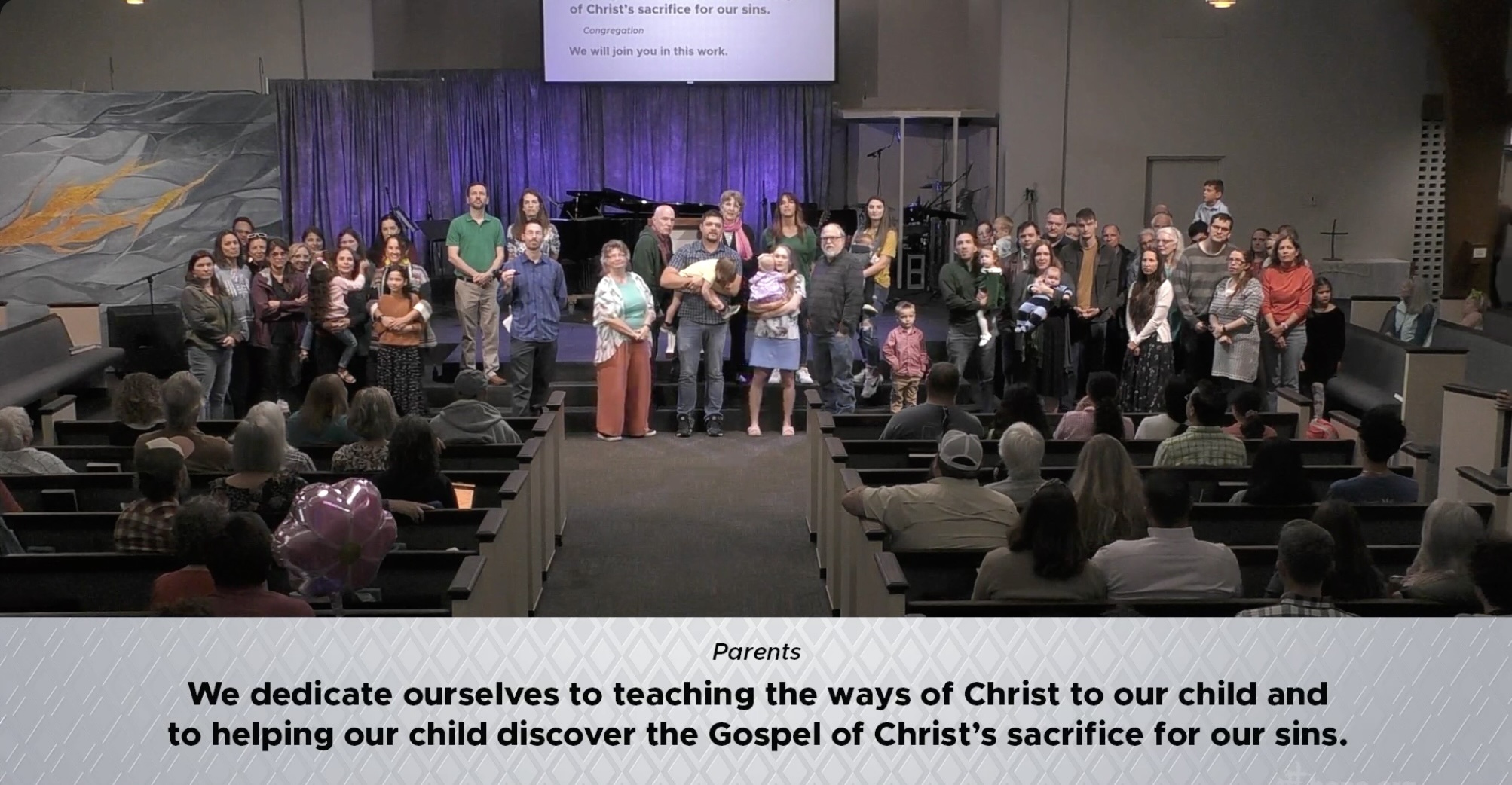
    Our next Parent/Child Dedication class is Wednesday, April 30 and in it we’ll cover the “why” of child dedications and principles for creating a Christian home. If you want to dedicate a child this spring or simply be encouraged in your parenting journey, please join Pastor Matt Ryniker and Children’s Ministry Director, Hala Tompkins for an evening of encouragement and equipping as you prepare to dedicate the newest member of your family to the Lord Jesus.

    Class starts at 6pm and we’ll be done by 7:30. Sign up for the class and childcare by emailing hala.

    The Sunday morning dedication service is scheduled for May 18, 2025.

  2. Easter Resurrection Sunday Service, April 20th, at 10AM

    Community Updates

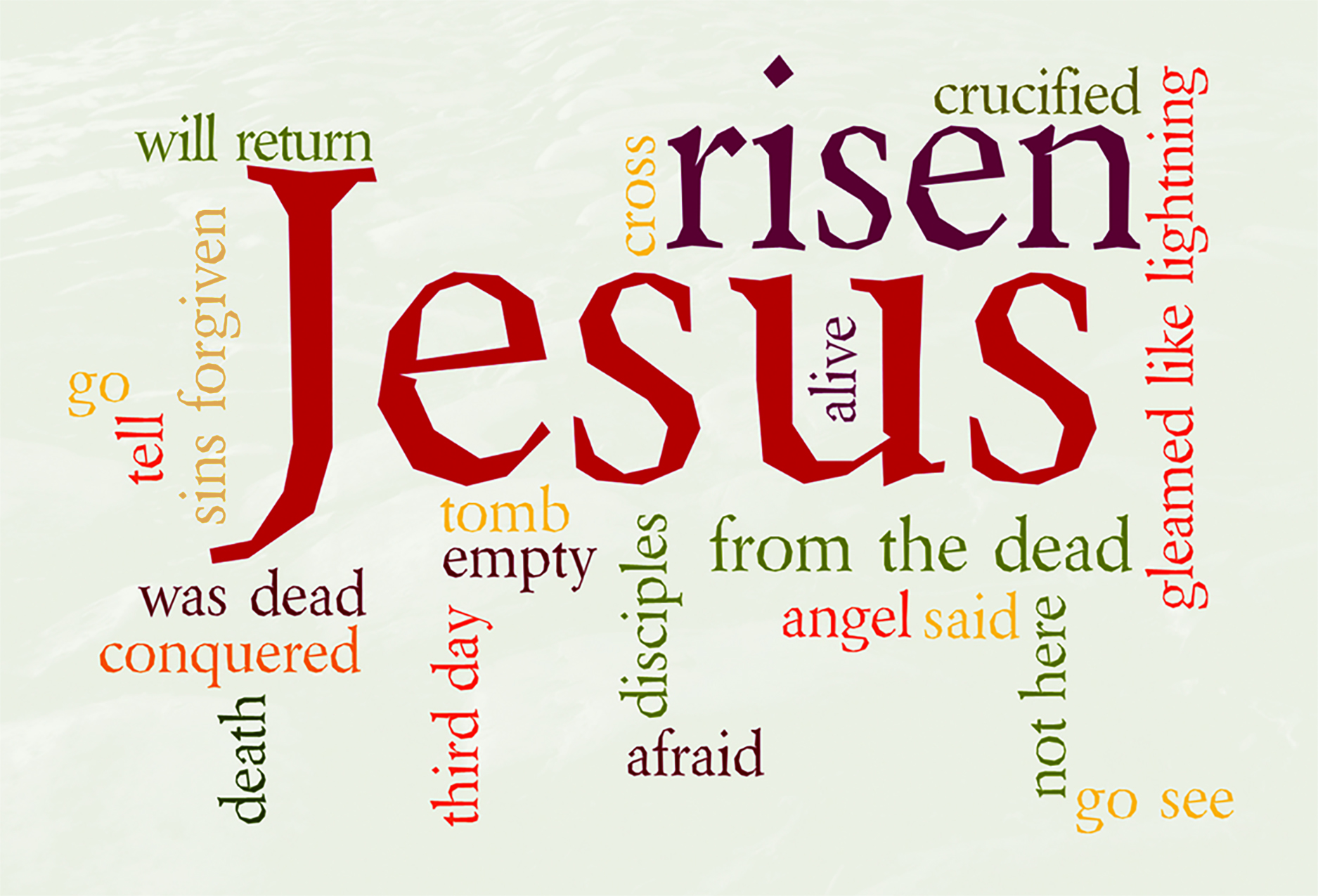
    Please join us at 10:00 AM as we celebrate our Risen Savior and Lord, Jesus Christ, the Son of God at Hope’s Easter Celebration – music and worship, celebration, Bible teaching, and the younger set has HopeKids classes (up to 5th grade).

    ____________________________________

    The Christian celebration of Jesus’ Resurrection.

    From the New Testament, the Gospel (Good News) of John, Chapter 20:

    Now Mary stood outside the tomb crying. As she wept, she bent over to look into the tomb and saw two angels in white, seated where Jesus’ body had been, one at the head and the other at the foot.

    They asked her, ‘Woman, why are you crying?’

    ‘They have taken my Lord away,’ she said, ‘and I don’t know where they have put him.’ 

    At this, she turned around and saw Jesus standing there…Jesus said, ‘…Go…to my brothers and tell them, I am ascending to my Father and your Father, to my God and your God.’

    Mary Magdalene went to the disciples with the news: “I have seen the Lord!” And she told them that he had said these things to her.”


  3. Good Friday Service

    Community Updates

    Our Good Friday service will be held on April 18th from 6:30pm to 8:30pm and includes seven friends from our community reflecting personally over the 7 last phrases Jesus uttered from the cross. It is always a very beautiful and poignant time together. Feel free to bring friends.

    HopeKids Program

    We recommend the service for children ages 6th grade and up but leave this to the parent’s discretion. Testimonies given may contain more mature content. A meaningful HopeKids program is provided for children in 5th grade and under.  Sign up by clicking HERE. The deadline for childcare reservations is April 9th. Parents who would like their Jr.High students to help with HopeKids should contact Joelene and let her know.

    Contact Joelene Michel with questions.

  4. John 12:12-13 — Palm Sunday

    Sermons

    New to Hope? We’re glad you’re here! Text the word WELCOME to 512-777-1826 to connect with our welcome team!

    The big idea

    Palm Sunday is the one day of Holy Week that gets waved through with a few palm fronds and a children’s procession, and Steve Hawthorne wanted it back. It is not a triumph and it is not a parade. It is a procession of praise for a king — and the crowd was there because a man had walked out of a tomb in Bethany a few days earlier.

    Key takeaways

    • “Triumphal entry” is not in the text. Nothing about that day is a victory lap; nobody has been beaten. It is a procession, and it is for the person at the center of it.
    • The donkey was not chosen only for humility. Solomon rode David’s royal mule up that same road to be made king. Jesus was making a claim, on the ground, in public.
    • Only John says the branches were palm branches. The other gospels just say the crowds cut branches from the trees.
    • The crowds came for two things: what they had seen Jesus do, and who they had heard was walking around alive. Lazarus was part of the draw.
    • Martha and Mary said exactly the same sentence to Jesus and meant two different things. One was an accusation; one was grief shared with someone who was grieving too.
    • Martha believed all the right doctrine and had still let go of hope for anything good in the present. Correct belief and abandoned expectancy can live in the same person.
    • Jesus reversed the proverb. Not seeing is believing — “if you believe, you will see the glory of God.”
    • Mary was not wasting the perfume. She had listened when Jesus said he was going to die, believed him when the disciples would not, and buried him early.

    ▶ 0:48:29

    Matt Ryniker introduced Steve as a mentor — in the scriptures, in preaching, in pastoral care — and noted that a man known worldwide as Dr. Hawthorne of the Perspectives on the World Christian Movement courses is, at Hope Chapel, just Steve. Steve, fussing with his lapel mic and his “antique tech stuff,” said he has been asked to preach Palm Sunday sixteen times now, and most of those sermons were different from each other.

    1. It is not a triumphal entry

    ▶ 0:52:15

    Steve’s complaint is that Palm Sunday gets overlooked. Church signs advertise Good Friday and Easter, and then, in smaller letters, come before that too if you can. In a lot of churches the day amounts to letting the kids be rowdy with fronds. Which is nice. But we know what matters — as he put it, with the room laughing, “it’s us getting died for,” and not going to the bad place, and living forever.

    So what is this day? Not about us at all. It is something marvelous happening for the person at the center of it — and it is the one event besides the passion that all four gospels record. Jesus arranged what could be arranged, particularly the donkey, and the rest simply happened.

    Then the heading in your Bible: the triumphal entry. “That’s nowhere in the Bible,” Steve said. “Any hint of a triumph or a victory. Triumph means, but I win and you lose.” Empires held triumphal processions — the army marches home, the city cheers, and it is a parade. This was not that. It was a procession, and no war had been won.

    2. The praise — what actually happened

    ▶ 0:56:36

    The route runs about three quarters of a mile down from Bethany, down the descent of the Mount of Olives, up to the eastern gate. The city was packed for Passover, and the noise carried far enough that anyone nearby would have come to look. Jerusalem asked who this was, and the answer came back: the prophet Jesus, from Nazareth in Galilee.

    “The next day the large crowd that had come to the feast heard that Jesus was coming to Jerusalem. So they took branches of palm trees and went out to meet him, crying out, ‘Hosanna! Blessed is he who comes in the name of the Lord, even the King of Israel!’”

    John 12:12–13

    ▶ 0:57:56

    Two details Steve wanted noticed. That verse is the only place in scripture that says the branches were palm; elsewhere the crowds simply break branches off the trees. And the shout itself is a quotation — Psalm 118, sung every Passover, the one line in the Bible that reads “Blessed is he who comes in the name of the Lord.” What the crowd added was not in the psalm: the King of Israel. Luke records the same addition, and records why they were shouting.

    “As he was drawing near — already on the way down the Mount of Olives — the whole multitude of his disciples began to rejoice and praise God with a loud voice for all the mighty works that they had seen, saying, ‘Blessed is the King who comes in the name of the Lord!’”

    Luke 19:37–38

    A multitude of disciples — not twelve. Hundreds, thousands, out of Galilee and Judea, praising God for miracles they had watched with their own eyes.

    3. Why a donkey

    ▶ 1:02:32

    The usual answer is humility: a lowly animal, not a warhorse, not what an emperor would ride. True as far as it goes, Steve said, but it is not the whole claim. The king Israel was waiting for was the son of David — and David gave an instruction about how his own son would be made king.

    “Take with you the servants of your lord and have Solomon my son ride on my own mule, and bring him down to Gihon.” … And all the people went up after him, playing on pipes, and rejoicing with great joy, so that the earth was split by their noise.

    1 Kings 1:33–40

    A royal mule, a crowd going up behind, noise loud enough to shake the ground, and a shout of long live the king. For Jesus to ride that same road a thousand years later was a statement, and Steve took some care over the detail that no one had ever ridden this colt — nobody was going to mistake it for the neighbor’s animal.

    4. The preparation — what gathered the crowds

    ▶ 1:06:39

    Here the message turned back a few days, because John says plainly that the crowd came not on account of Jesus only but to see Lazarus, whom he had raised from the dead. As Steve put it: wouldn’t you go see the dead man walking?

    He introduced the household first — Mary, Martha, and their younger brother, with means enough to host a long funeral and a banquet, which reads like an inheritance from a father already gone. And the room already knows Martha from Luke: distracted with much serving, bursting in on a sister who was sitting at Jesus’ feet listening.

    “Martha, Martha, you are anxious and troubled about many things, but one thing is necessary. Mary has chosen the good portion, which will not be taken away from her.”

    Luke 10:41–42

    “Martha, Martha,” Steve said — the name twice, because he loved her too. Choose the good portion. If you have to leave early, choose to listen to Jesus.

    ▶ 1:11:02

    Then the sickness. The sisters sent word — “Lord, he whom you love is ill” — and Jesus, more than a day’s walk away, stayed two days longer. He told the disciples the illness was not unto death but for the glory of God, and that he was glad, for their sakes, that he had not been there, so that they might believe. Steve pressed the obvious objection: does God use illness like that? What is being asked for here is not that a sick man recover. It is trust that God will do something altogether glorious — not fix, not repair, but bring about something better than there was before.

    5. Two women, one sentence

    ▶ 1:17:06

    Bri Shapy read a long dramatized retelling of the walk to the tomb, and it carried the weight of the morning. Martha, head down on the narrow road, striding out ahead of the funeral guests without knowing what she meant to say. Then the words she had been holding: “Lord, if you had been here, my brother would not have died.” The reading was blunt about what they were — “she swung them through the air like a weapon, an accusation. And that’s exactly what she had meant them to be.”

    She followed it with something respectable about God always being in control, and when Jesus said her brother would rise again, she gave the correct answer about the last day. Steve’s point is the one worth carrying home: she believed everything true about him — Messiah, sent from God, resurrection coming — and she had still abandoned hope. “The molten fury of grief was hardening into a blank bitter despair.” No more expecting Jesus to do good things in the here and now.

    “I am the resurrection and the life. Whoever believes in me, though he die, yet shall he live, and everyone who lives and believes in me shall never die. Do you believe this?”

    John 11:25–26

    ▶ 1:29:07

    Mary said the identical sentence and meant something else entirely. She fell at his feet weeping, and she was weeping with him — she knew Jesus had loved Lazarus and had lost him too. Her grief put his love on display, and the onlookers who had been muttering that he should have prevented this saw it: look how he loved him. Jesus wept, and Steve noted the Greek uses a different, deeper word for what Jesus did than for ordinary weeping. He was also angry — something stirred way down inside at the whole business of death.

    That is where the honest question sits, and Steve did not dodge it. Hope has had funerals recently, good people who meant something. If God is loving and also all-powerful, why doesn’t he just make people better? Why is there grief at all?

    6. Believing to see

    ▶ 1:33:21

    At the tomb Martha objects — four days, the stench, the guests. And Jesus answers her with the sentence the whole message hangs on.

    “Did I not tell you that if you believed you would see the glory of God?”

    John 11:40

    We say seeing is believing. Jesus turns it around. Believing is not assent to correct facts here; it is expectancy — actually hoping God will do something.

    ▶ 1:35:24

    Then Jesus looks up and prays: “Father, I thank you that you have heard me.” Past tense, before he has said anything aloud — because, Steve argued, he had been praying for days. The words at the tomb were for the crowd, so they would know this was God at work and not a miracle worker doing tricks. “Prayer doesn’t work. There’s not a prayer that works. It’s God at work.” And Jesus never did anything ordinary people could not follow him into — Peter got out of the boat too. Then: Lazarus, come out.

    7. The dinner, and what Mary understood

    ▶ 1:40:00

    Six days before the Passover they threw a dinner. Martha served, of course. Lazarus was at the table. And Mary brought a pound of pure nard and poured it on his feet and wiped them with her hair — a fortune, gone in a moment. Judas objected that it should have been sold for the poor, and John tells us why he really said it.

    “Leave her alone, so that she may keep it for the day of my burial. For the poor you always have with you, but you do not always have me.”

    John 12:7–8

    The line about the poor is a quotation from Deuteronomy 15:11, and Steve was firm that it does not mean the poor do not matter — the whole passage commands generosity to them. It means this was something else. Mary had been listening. Jesus had told the others he was about to be killed, this Passover, and they refused it. She believed him, and she anointed his body for burial while he could still feel it. She has done a beautiful thing to me.

    8. The hope of glory

    ▶ 1:45:00

    Steve brought it back to the losses in the room — the accidents, the cancer, the grim news of war. God is not running us through a test to see how we come out. He puts his heart with ours and weeps alongside us, and what he is after is not that everybody gets a pleasant life.

    And that is why Palm Sunday cannot be shrunk to admiration. Jesus did not come to be a life coach or a teacher we learn a great deal from. We ought to be good and faithful people like him, Steve said — “but we can’t do that. You never can find it.” The way it becomes possible is that his life is joined to ours. His death becomes your death, because what is wrong with you cannot be repaired and has to be killed, and none of us survives our own death on our own. Then his life becomes your life.

    Easter, then, is not mainly about going to heaven when we die. It is that the living one has a life he can share with anyone who comes to him. Believe him — as Steve prayed at the end, we would like to see it all clearly first and then believe, but he has already made himself trustworthy. Follow him as a king and not just a teacher.

    Around the service

    Earlier, telling a story before the children were released, one of the pastors described a Palm Sunday twenty years ago at an amphitheater beside the Garden of Gethsemane. Told to go apart and pray, he lay face down in the grass — and, having grown up on a farm, knew immediately he was in stinging nettle. He was already committed, so he stayed. He got up weeping, because with his face stinging and broken out he was thinking about how much more Jesus would go through that week to save us.

    Kathy Tuchek prayed Psalm 145 over a congregation she knew was split that morning between rejoicing and quiet financial fear, asking that the Lord who upholds all who are falling would raise up whoever was bowed down. Matt encouraged the church toward Good Friday and Easter, and toward the easiest outreach there is: come early and talk to the guests, who are already in the building and already warm to the idea.
  5. Matthew 27:46 — “Why Have You Forsaken Me?”

    Sermons

    New to Hope? We’re glad you’re here! Text the word WELCOME to 512-777-1826 to connect with our welcome team!

    The big idea

    When Jesus cries out “My God, my God, why have you forsaken me?” he is not
    reporting that the Father has turned away from him. He is quoting the opening line of
    a psalm that ends in confidence, and the thing he was abandoned to is death — which
    is what actually pays for sin.

    Key takeaways

    • The verse used to prove God cannot look at sin, Habakkuk 1:13,
      says the opposite once you read the whole sentence. It is a prophet’s complaint that God
      is looking and has not yet acted.
    • Naming a psalm by its first line was ordinary practice — Genesis was Bereshit,
      Exodus was Shemot. Jesus quoting Psalm 22:1 pulls the entire psalm in with it.
    • Psalm 22 explicitly denies the reading built on its first verse: God “has not hidden his
      face” from the afflicted one.
    • If the Father cut off the Son, he cut off the Spirit too — because Hebrews says Jesus
      offered himself “through the eternal Spirit.” The Trinity was working together at the cross,
      not fracturing.
    • Jesus said the disciples would scatter and he would still not be alone, and he said it
      about the night of his arrest and death.
    • The wages of sin is death, not passive aggression. Atonement runs through poured-out
      blood, because the life is in the blood.
    • The Father had rescued Jesus from death repeatedly. That he did not do so this time was
      cooperation, not rejection — Jesus laid his life down on his own authority.
    • This is pastoral, not academic. If you believe God recoils from sinners, you have nowhere
      to go at your worst moment.

    ▶ 1:10:19

    Good Friday leaves Matt no room in the preaching calendar for a message on the
    crucifixion itself — that service belongs to seven members of the church speaking on the seven
    last words. So he has made it an annual tradition to take the Sunday before Palm Sunday and put
    it here, on one sentence Jesus said from the cross.

    The sentence, and the four beliefs stacked on it

    ▶ 1:13:06

    “And about the ninth hour Jesus cried out with a loud voice, saying, ‘Eli, Eli, lema
    sabachthani?’ that is, ‘My God, my God, why have you forsaken me?’”

    Matthew 27:46

    A great many people hear in that line the moment the Father turned his back, and take that
    turning to be the punishment for sin itself — as though the wages of sin were God’s cold
    shoulder. Follow it through and you arrive somewhere strange: a crucifixion in which the debt is
    settled before Jesus dies, and his actual death becomes a redundant afterthought. “From my
    perspective,” Matt said, “that’s a train wreck.”

    He named the four beliefs feeding it. God cannot bear to look at sin or be around sinners. The
    Father turned his face away from Jesus. Jesus in that moment was cut off from God. And Jesus’
    emotional and relational separation from the Father is what atoned for sin. He took them one at
    a time.

    1. God cannot look at sin

    ▶ 1:16:26

    “You who are of purer eyes than to see evil and cannot look at wrong, why do you idly look
    at traitors and remain silent when the wicked swallows up the man more righteous than he?”

    Habakkuk 1:13

    Books quote the first third of that verse and stop, and they have to stop, because the rest of
    the sentence dismantles the point. This is a prophet in tension, asking God why he is doing the
    very thing Habakkuk assumed he could not do — looking on evil and not yet acting. A confused
    question is not a foundation for a doctrine of God’s nature.

    The counter-evidence is not subtle. The eyes of the Lord run to and fro throughout
    the whole earth
    — not, Matt noted dryly, concentrating on oceans, glaciers and uninhabited
    islands while avoiding the population centers. Jeremiah 7:11 has God saying of the temple
    turned into a den of robbers, “Behold, I myself have seen it.” And the whole point of the exodus
    was proximity:

    “And they shall know that I am the Lord their God, who brought them
    out of the land of Egypt that I might dwell among them.”

    Exodus 29:46

    Satan himself reports among the sons of God in Job 1. And then there is
    every interaction Jesus ever had with anyone. “Did Jesus walk down the busy streets of any town
    in the Galilee area with his eyes shut and his fingers in his ears?”

    The escape hatch is to make Jesus something less than God — the glove God wears to handle
    disgusting humanity. Matt shut that door hard: Jesus is God from God, light from light, begotten
    not made, and he was no less God during his earthly ministry, or there was nothing of value being
    sacrificed. Romans 9:5 puts it plainly — from Israel’s race, according to the flesh,
    is the Christ, “who is God over all, blessed forever.” God can look at sin. God can be friends
    with sinners.

    2. The Father turned his face away

    ▶ 1:28:06

    We know that one mostly because we sing it. Which is where discernment belongs: if the book in
    your hand does not say Holy Bible on the front, take it with a grain of salt and go back to the
    scriptures.

    So go back to where Jesus got the line. Psalm 22 opens exactly where Matthew 27 does, and
    David is complaining bitterly to God about a desperate situation — an example, Matt said, of how
    open you are allowed to be about your frustrations. But the psalm keeps going. David rehearses
    God’s track record of rescue (Psalm 22:3–5), calls himself a worm, and describes
    the mockery: they wag their heads and say “He trusts in the Lord; let him deliver him.” Then he
    remembers that God has held him since the womb (Psalm 22:9–11), and describes
    his body giving out — bones out of joint, heart like wax, tongue stuck to his jaws.

    ▶ 1:32:39

    “For dogs encompass me; a company of evildoers encircles me; they have pierced my hands and
    feet — I can count all my bones — they stare and gloat over me; they divide my garments among
    them, and for my clothing they cast lots.”

    Psalm 22:16–18

    That is David describing his own anguish, centuries early. Matt kept stopping to remind the
    room which book they were in. And then the psalm turns a corner into prophetic confidence, and
    says the thing the popular reading of verse 1 denies:

    “For he has not despised or abhorred the affliction of the afflicted, and he has not hidden
    his face from him, but has heard, when he cried to him.”

    Psalm 22:24

    Same move as Habakkuk: take a fragment, build a belief, and the whole passage refutes it. The
    psalm ends with all the ends of the earth turning to the Lord and a people yet unborn being told
    that he has done it (Psalm 22:27–31).

    ▶ 1:39:00

    In ancient Judea you named a work by its opening words — Genesis is Bereshit, Exodus
    is Shemot — and you could invoke an entire psalm by quoting its first line. Matt thinks
    Jesus was running the whole psalm, and that the people who knew their Psalms were running it too:
    the gloating, the countable bones, soldiers literally casting lots for his clothes. “Am I taking
    crazy pills? Are we seeing something tremendous right now?”

    And ask it from David’s side. Did David sound relationally abandoned? He sounded hunted to the
    point of death, while insisting God had been near him since birth. It would be strange for Jesus
    to quote a psalm to mean something its author never meant.

    3. Jesus was cut off from God

    ▶ 1:39:38

    Start with the member of the Trinity nobody mentions in this argument. Where was the Spirit?

    “How much more will the blood of Christ, who through the eternal Spirit offered himself
    without blemish to God, purify our conscience from dead works to serve the living God.”

    Hebrews 9:14

    At the cross the Son and the Spirit are plainly cooperating. For the Father to cut off the Son
    he would have to cut off the Spirit as well, which makes no sense because it is not what is
    happening. “I and the Father are one” was not a claim about most days. In
    John 8:28–29 Jesus ties it directly to being lifted up: “the one who sent me is with
    me.”

    If that sounds too cryptic to lean on, John 16 hands us the moment the disciples themselves
    say he has finally dropped the figures of speech and is talking plainly. Here is what he says
    once everyone is on the same page:

    “Behold, the hour is coming, indeed it has come, when you will be scattered, each to his
    own home, and will leave me alone. Yet I am not alone, for the Father is with me.”

    John 16:32

    The scattering is not during the miracles and the crowds. It is the arrest, the trial and the
    death — and that is precisely where he says he is not alone. As for what the Father was occupied
    with while the most beautiful sight in the universe was in front of him:

    “All this is from God, who through Christ reconciled us to himself and gave us the ministry
    of reconciliation; that is, in Christ God was reconciling the world to himself.”

    2 Corinthians 5:18–19

    Not a turning away. An aggressive pursuit of the lost and the broken.

    4. So what actually atoned for sin

    ▶ 1:47:00

    If Jesus was not suffering divine passive aggression on our behalf, what was he suffering?
    Peter answers it: Christ suffered once for sins, the righteous for the
    unrighteous, that he might bring us to God, “being put to death in the flesh.”
    Death, because
    the wages of sin is death — the Greek, Matt pointed out, does not say passive
    aggression.

    Why death, though? One of his favorite verses, buried in a book most people never finish:

    “For the life of the flesh is in the blood, and I have given it for you on the altar to make
    atonement for your souls, for it is the blood that makes atonement by the life.”

    Leviticus 17:11

    What was in Jesus’ blood was his life. Pouring it out was not the price of a transaction so
    much as a transfusion — he was giving us what was in it.

    Which leaves the word forsaken with real content: he was abandoned to death. And even
    that was a gift the Father cooperated in. Matt ran the list of times it did not happen — Nazareth
    wanting to throw him off a cliff in Luke 4, the plotting after the Sabbath
    healings in Matthew 12 and John 5, four separate attempts across
    John 7, the stones picked up in John 10:31–39. Every time, the Father
    protected him. So why not now?

    “For this reason the Father loves me, because I lay down my life that I may take it up
    again. No one takes it from me, but I lay it down of my own accord.”

    John 10:17–18

    It would have been strange for the Father to interrupt the one thing his Son had come to do
    on purpose. Which also disposes of the divine-child-abuse charge: there is no child here, Jesus
    being a grown man of eternal age, and the centurions were never the ones in control.

    That reframes “It is finished.” Isaiah says of the servant that he poured out his soul
    to death
    — death is where it culminates. Jesus is not announcing that the bill is settled and
    he may as well die now anyway. He is speaking proleptically, of a thing so imminent it is already
    true, and saying it before he dies so that no one can later claim he never really died.

    Why it matters on a Tuesday

    ▶ 1:50:40

    Matt closed pastorally, and this is the reason he keeps preaching it. If you believe the wages
    of sin is a cold shoulder — that God’s instinctive response to your sin and brokenness is to turn
    away — then when you are at your most broken, you have nowhere to go. You can conjure his rage
    against you easily enough. Where do you turn? Stuck in the addictive, destructive power of sin,
    he is the first person you should go to.

    “Jesus was not convincing the Father to love us by his death. He was
    demonstrating the Father’s love in his death.”

    He would not have us imagine a Father talked round at the last minute — as if, after the
    incarnation and everything that followed, God said, well, if you’re going to do all that, I
    guess I’ll love these disgusting people. Just for you.
    Jesus does not coerce the Father’s
    love. He displays it.