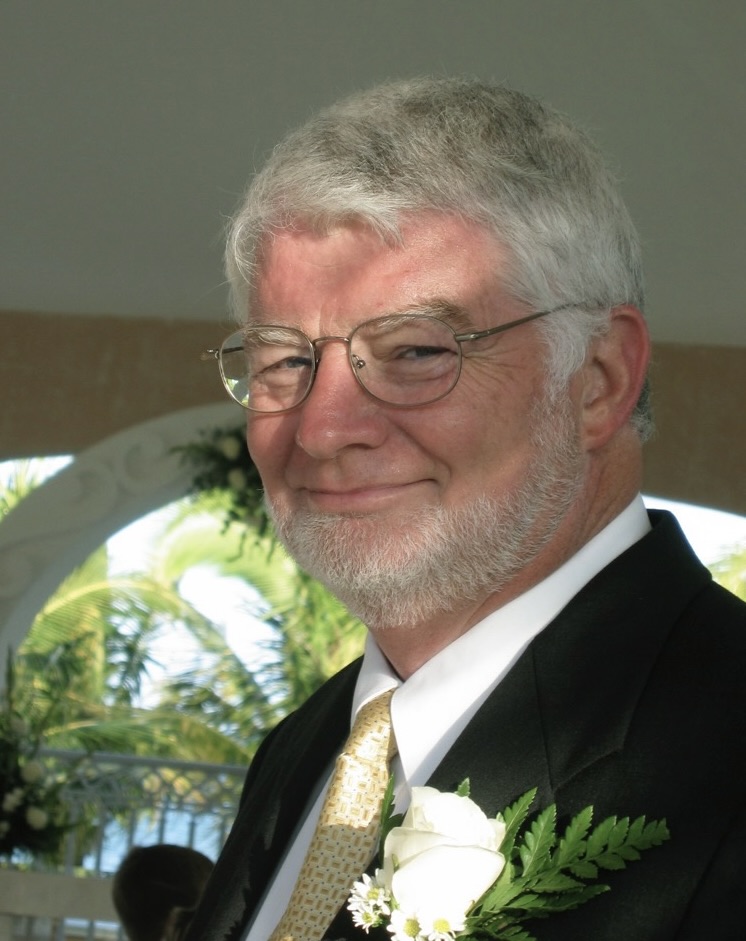
The big idea
Jack Dorman spent years unable to accept the answer he kept being given — that God made people
because he wanted worship. What he came to instead is that the greatness of God leaves a person no
choice about it. And what God asks for is not a song. It is a body: your work, your thinking, your
training, and whatever is in front of you at seven in the morning.
Key takeaways
- God did not make us because he needed worship. If that were the point, robots would have
done. Worship is what the greatness of God pulls out of someone who has actually seen him.
- Romans 12 asks for bodies, not songs. Everything you have and all that you are is the
offering — which means a morning spent mopping a flooded lobby counts, and Jack’s did.
- Dan Davis prayed that the church would worship God with the mind as well as the spirit and
the acts. For a man carrying doubts he could not shake, that one line was permission to think.
- Competence in a crisis is prepared for years in advance. Jack took Dan’s leadership classes
only because Dan made him, and a decade later ran a forty-person office on what he learned.
- The training exercise that marked him was rigged so nobody could win. What broke him was
realizing that the bosses who had hurt him were either trained into it or thrown in untrained.
- You are formed by particular people, and then you lose them. Jack lost two men in a month
who had shaped him, and told the church it is better because of them.
▶ 1:23:28
Jack Dorman came back to a pulpit he used to hold, on the first Sunday of the year,
the day after Hope Chapel’s memorial service for Dan Davis. He brought paper rather than the iPad —
he showed the iPad to the room so everyone knew he owned one — because he gets lost and jumps
around. He also brought the Bible Dan gave him in May 1988, inscribed “with much appreciation and
gratitude for the friendship and love.” He had not planned to be emotional. “I’m really full,” he
said.
Two holes
▶ 1:25:06
Two men he had known for more than thirty years, Cotton and Dan Davis, died within a month of
each other. “One of the rewards for living a long time is you get to say goodbye to really good
friends,” Jack said. He is 74 and never planned to be. “They occupied their skin about as well as
anyone I know. They shaped me, and I’m a way better person because of them — and Hope Chapel, you
are much, much better because of them as well.” He is still mourning, and it comes at odd times.
What Dan was like
▶ 1:28:42
Two weeks after the Dormans came back from their honeymoon in August 1978, the doorbell rang
somewhere between nine and ten at night. Deb was already in her nightgown, new to a strange city
with no friends in it, still working out what it meant to be married to this man. On the step stood
Dan and Joanne Davis, welcoming her to the neighborhood. “That was inappropriate behavior,” Jack
said, “and Dan loved it. He loved every minute of it.”
▶ 1:31:30
Later Dan decided that he, Jack, and a manager named Alan needed to lose weight. Each picked a
target and had two or three months to hit it, and the forfeit for missing was burning a fifty-dollar
bill. Jack started negotiating as the date got closer — he offered to write a five-hundred-dollar
check and cancel it before anyone could deposit it. “If I gave it away to somebody, if I gave it to
Hope or to someone on the street, the utility of that fifty-dollar bill would stay intact. You burn
it, it’s gone.” They all made weight. He never agreed to a pact with Dan Davis again.
▶ 1:34:22
He also worked out, eventually, why Dan liked taking him to lunch. Dan drove a Fiat Spider of
questionable reliability, and Jack was big enough to push it to a jump start.
The question he could not put down
▶ 1:36:50
Jack grew up in a household of worship leaders. His parents were, by his account, lovely and
amazing, which is exactly why he wanted nothing to do with the job — not out of rebellion, he said,
he just did not like the sound of his own voice. Then he kept ending up in small rooms with no
instruments and nobody else willing, so he led out. And the more he did it, the more the question
pressed: why do this at all? The answer he kept being handed was that God made us so we could
worship him. “Why would God make robots? He could just make robots if he just needs worship.”
▶ 1:37:32
So he sat in Dan’s living room on Mandeville Circle, fire going, feet up, noodling on ethereal
questions, while Dan asked him what he wanted to do with his life and what his career plans were.
Jack kept asking why we worship. Years later he found out what had actually been happening in that
room: Dan was recruiting him, working his plan, while Jack was busy trying not to have one.
▶ 1:39:00
Steve is the one who helped him land it. God did not create people because he needs the worship.
It is the greatness of God, the awesomeness of him, that calls it out. “I’ve got to say this, I’ve
got to sing this, I’ve got to live this, because of who he is — not because I’ve got to do it.” Jack
noted that Steve has only grown softer about the beauty of God with the years; he will be explaining
something mid-conversation and start to weep over it.
A congregation treated as a gathering of leaders
▶ 1:39:49
Early on, Dan was surrounded by young, immature, largely goalless people — Jack put himself
first in that line — and he started talking about leadership development and the need for strong
believing leadership.
▶ 1:40:34
He had the résumé for it: twenty-five years in the computer industry, Hughes Aircraft, Motorola,
then Intel. When Dan left Intel, Andy Grove flew to Austin and spent a day trying to talk him out of
going. “For the CEO of a company to come and spend a whole day trying to talk somebody out of
leaving the company is a big deal to me.”
▶ 1:42:30
So the classes began, in a house on Shoal Creek because there was no building yet — Saturday
mornings, two or three hours at a stretch, running twelve or sixteen weeks. Decision-making,
authority structures, accountability, responsibility. Case studies, theory, practical application.
Jack was not interested in business leadership issues. “I took the classes because Dan made me.”
The role play
▶ 1:43:46
One exercise stayed with him. Pairs went off to separate rooms with a script each. Jack’s said
his employee had been late for months, was leaving assignments unfinished, had already been put on
notice, and today was the day he terminated them. The employee’s script said they had worked hard,
the boss had never communicated expectations and had set impossible goals, and this meeting was
their chance to explain and negotiate. Lose-lose by design. Ten or fifteen minutes, and both of them
knew it was a game, and it was still one of the hardest quarter-hours he can remember.
▶ 1:45:59
When it ended he could not walk back into the room with everyone else. He stood against the wall
and wept. “I still can’t tell you why exactly.” Part of it was a discovery he had never made: the
managers he had worked under at Texas Instruments had been awful, and it had honestly not occurred
to him that anyone was trained to lead like that — or, worse, thrown into the breach with
no training at all. “It hurt my heart, because I was thinking, this was really good stuff, and we
need to be trained to do better.”
▶ 1:48:49
A decade later he was directing a software development office in Austin: forty people to hire,
performance reviews, salaries, firings. He will not claim he was good at it — “the results are just
where they are” — but he knows where he got what he had. “Everything that I did was probably somehow
predicated on what Dan Davis taught me in those classes.”
All of it is the offering
▶ 1:49:40
And the other thing Dan taught him closed the circle on the question. All of work, all of life,
is an act of worship. Sitting at a terminal reading dumps for a company processing seismic data for
petroleum firms — that was the offering. “It changed my whole perspective on what I did and how I
did it. This is for you, God.”
▶ 1:51:01
Then, one morning when he was pastor, he came in early — he loves being early, getting things
ready — and the men’s restroom had overflowed into the lobby. Nobody else was there. He knew where
the mop and pail were. Standing in the water, it came to him that this was worship, and he started
singing.
“Now unto the King eternal, immortal, invisible, the only wise God, be honour and glory for
ever and ever. Amen.”
1 Timothy 1:17 (KJV)
He sang and cried and mopped for half an hour so the room would be ready when everyone arrived.
“It didn’t make me a great person. I’m not telling you this because — oh wow, look what Jack did.
No. Everything I do, I want to do unto God.”
▶ 1:52:52
“I appeal to you therefore, brothers, by the mercies of God, to present your bodies as a living
sacrifice, holy and acceptable to God, which is your spiritual worship. Do not be conformed to
this world, but be transformed by the renewal of your mind, that by testing you may discern what
is the will of God, what is good and acceptable and perfect.”
Romans 12:1–2
“I used to have that whole chapter memorized,” Jack said. “Those words stick in me. Offer your
bodies. Offer your acts. Everything you have, all that you are — which is your reasonable service of
worship.”
Worship him with your mind
▶ 1:53:34
Dan opened every morning with a pastoral prayer, and one line in it always caught him: that we
would worship God with our mind, and with our spirit, and with our acts. Both men came out of a
Pentecostal background, in a stretch of years when saying so in this city was faintly embarrassing.
Jack is not angry about it and not marred by it — it is simply who he is, and he has no regrets
about it.
▶ 1:55:07
But hearing worship of the mind prayed out loud, week after week, was permission. “I get
to think and have doubts and wrestle with them and come to some conclusion, because I trust God to
speak to my heart and bring me out at the end.” That is how a man with an unanswerable question ends
up with an answer.
Two instructions
▶ 1:55:47
The first was to keep getting trained, all your life. He pointed back at the foster care
conference announced earlier in the service as his example: “How would you do that if you didn’t
receive training? Happenstance fostering doesn’t work.” We prepare in advance so we can act well in
the middle of a crisis — or in the middle of a celebration. “We do a lot of training at Hope
already. Let’s keep it up, and let’s do more.”
▶ 1:57:22
The second was shorter: be a worshipper all your life. He had watched the band that morning and
thought about everything that goes into it — he still carries five things at once when he leads. How
is this song going. What is my next word. How does it fit the set. How much time is left. Is there
something God wants to say right now. He thanked the musicians by name from the platform, checking
twice that he had not left anyone out. Nobody has to sing, he said; you could read scripture through
the whole set and there would be nothing wrong with it. But there is something to singing true words
together, using our minds to think the best thoughts about God we can manage.
▶ 1:58:55
“For we are his workmanship, created in Christ Jesus for good works, which God prepared
beforehand, that we should walk in them.”
Ephesians 2:10
“So many good works, so many good things to do,” Jack said — “and to offer them all up as
worship.” Then he did a Dan Davis thing and made everyone stand and tell the person next to them
one thing that had stood out, cheerfully allowing that “I have no idea what he was talking about and
I can’t wait to get out of here” was an acceptable answer. The service closed on the doxology, one
of the many songs there had not been room for the day before.